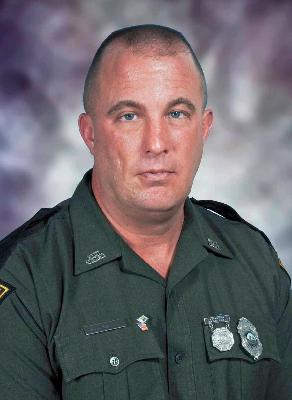
Eric Michael Workman, a 26-year-old White/Caucasian man, was a West Virginia State Police trooper assigned to the Clay County area when a traffic stop on the evening of August 28, 2012, turned into a deadly attack on law enforcement. Although some records associate his death with the date of the shooting, official West Virginia records show that Workman survived for several days and died from his wounds on August 31, 2012, at Charleston Area Medical Center. He was a native of Ivydale in Clay County and had joined the West Virginia State Police in 2011 after graduating from Clay County High School and West Virginia State University, where he had been a standout baseball player.
The events that led to the shooting began with reports of a pickup truck being driven recklessly on Interstate 79. Authorities later determined that the truck had been stolen. Corporal Marshall Bailey and Workman located the vehicle and stopped its driver, Luke Baber, at the Wallback park-and-ride near the Clay-Roane County line. Baber was determined to be impaired and was taken into custody. The troopers searched him, handcuffed his hands in front of his body and placed him in the rear seat of Bailey's police cruiser while arrangements were made to have the pickup towed.
Unknown to the troopers, Baber still had a concealed handgun hidden in his clothing. While seated in the back of the cruiser, he was able to retrieve the weapon. After Bailey and Workman entered the front of the vehicle, Baber suddenly opened fire on them at close range. Bailey was fatally wounded at the scene, while Workman suffered critical gunshot injuries. Reports described the weapon Baber produced as a 9mm pistol that had gone undetected during the initial search. Baber was also able to get free of the cruiser and obtain one of the troopers' weapons as the violence continued.
William Massey, a tow-truck driver who had been called to remove the stolen pickup, arrived in the midst of the attack. Baber shot and wounded Massey before fleeing from the immediate area on foot. Massey survived and was able to get away and seek assistance. Baber then moved into a nearby wooded area as law-enforcement officers from Clay and Roane counties converged on the scene.
The confrontation was not over. Baber positioned himself in an area where he could fire on responding officers and exchanged gunfire with deputies searching for him. Roane County Deputy John Westfall was struck several times during the gun battle, with reports describing wounds to areas including his arm, hand and torso. His protective vest helped limit the severity of some of the gunfire, and he ultimately survived. Other responding officers returned fire, striking Baber. Baber died from the wounds he received during that exchange.
Workman, meanwhile, had been rushed from the original shooting scene to Charleston Area Medical Center. He remained in extremely critical condition and was placed on life support. His injuries proved unsurvivable, and he died on August 31. His family honored his decision to be an organ donor, allowing his death to provide lifesaving opportunities for other people.
Because Luke Baber was killed during the armed confrontation with responding deputies, there was no later homicide arrest, criminal prosecution or murder trial concerning the deaths of Workman and Bailey. Baber had technically already been arrested by the two troopers before the shootings occurred, but that arrest was for the conduct leading to the traffic stop and his impaired condition rather than for the violence that followed. His death at the scene ended the possibility of bringing murder, attempted-murder, wounding or related charges against him in court.
The circumstances of the shooting became particularly painful for the Clay County community because both troopers had been carrying out what began as an ordinary public-safety response to a reckless driver. Workman had completed State Police Academy training only the year before and was still early in his law-enforcement career. He had served with the State Police Honor Guard and had expressed particular interest in combating alcohol and drug abuse. In the months before his death, he and Bailey had also contributed information to a federal investigation into methamphetamine trafficking in the Clay County area. That investigation later resulted in the conviction of methamphetamine dealer Raymond Hersman, providing a final example of investigative work the two troopers had performed before they were killed.
West Virginia later formally memorialized Workman and Bailey near the area where the attack occurred. State records recognize August 28, 2012, as the date Workman received his fatal injuries and August 31, 2012, as his official end of watch and date of death. What began with reports of a stolen pickup being driven recklessly along Interstate 79 ultimately left two state troopers dead, two additional people wounded and the gunman dead following an exchange of fire with responding law enforcement.