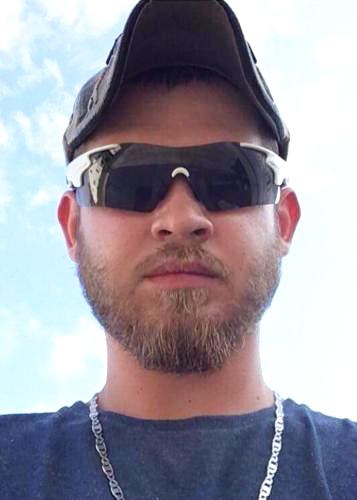
Frank Oldaker, a 57-year-old White/Caucasian man, was fatally shot on April 17, 2014, inside the Lesage, West Virginia, home he shared with his longtime girlfriend, Angela Kay Chapman. The residence was located in the 6000 block of Big Seven Mile Road in Cabell County. According to later court and news accounts, Oldaker was on a couch inside the home when he was shot. His sister, Nancy Oldaker Beard, later described him as having been asleep on the couch when the shooting occurred.
The circumstances immediately following the shooting quickly focused investigators on Chapman. According to the criminal complaint, Chapman contacted her sister after the shooting, and her sister could tell that something was wrong. When the sister went to the couple's residence, she discovered Oldaker dead on a couch in the television room. The complaint said Chapman repeatedly expressed disbelief over what she had done and indicated that she had not intended to shoot him.
Cabell County sheriff's deputies subsequently arrested Chapman in connection with Oldaker's death.
Prosecutors initially pursued the case as a homicide and charged Chapman with first-degree murder. The case remained pending for well over a year as it moved through Cabell County Circuit Court. During that period, Chapman was at times held in jail and at other times placed on home confinement. In June 2015, after she had been released on home confinement, the residence where Chapman and her mother were staying was targeted in a series of apparent arson attacks. Deputies reported that Molotov cocktails were used in two attempts one night, followed by another fire the next day that caused significant damage. Investigators believed the attacks were connected in some way to the Oldaker shooting, although they reported having no identified suspects in those fires at the time. Concerns about Chapman's safety resulted in her being returned to the Western Regional Jail before a judge later permitted her to resume home confinement at an undisclosed location.
The murder prosecution ultimately ended without a trial. On December 28, 2015, Chapman appeared in Cabell County Circuit Court and entered a Kennedy plea to the lesser offense of voluntary manslaughter. Under the Kennedy rule, she was permitted to accept the criminal disposition without personally admitting guilt. The agreement substantially reduced the charge from the first-degree murder count she had originally faced, but it still exposed her to a prison sentence of between three and 15 years. Prosecutors maintained that Chapman had fatally shot Oldaker at their home on April 17, 2014.
Chapman's sentencing brought the nearly two-year criminal case to its conclusion. On March 8, 2016, the court imposed the maximum sentence for the voluntary manslaughter conviction: 15 years in prison. She received credit for time she had actually spent incarcerated, but the judge did not give her credit for the period she had spent on home confinement. Chapman was taken into custody immediately following the sentencing hearing.
For Oldaker's family, the sentencing provided a measure of legal closure after a death that had begun with violence inside what should have been the safety of his own home. His sister spoke publicly after the proceedings about how close the siblings had been growing up and said that, although nothing could truly make the loss over, the resolution of the case provided the family with some sense of closure. What began with Oldaker being found dead on a couch in the Lesage residence ended with the woman who had shared that home with him convicted of voluntary manslaughter and ordered to serve the maximum 15-year prison sentence.