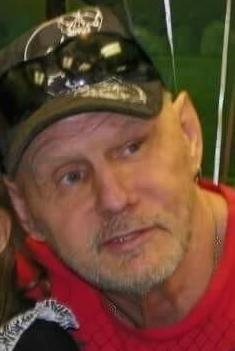
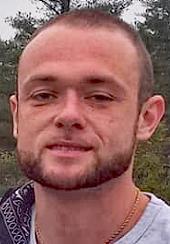
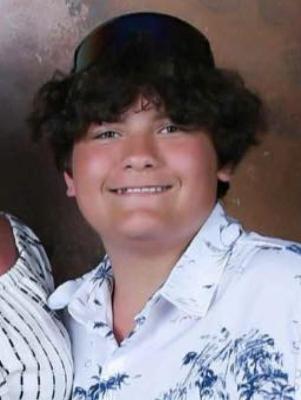
Micah Tyler Burdette, a 20-year-old white/Caucasian man from St. Albans, West Virginia, was killed on September 9, 2014, in St. Albans City Park. Burdette had grown up in the area and graduated from St. Albans High School in 2013. He had played both football and baseball and had also participated in acting classes. His obituary described a young man surrounded by a large family whose sudden death left those closest to him struggling with an enormous loss.
The case began when hikers discovered Burdette's body in St. Albans City Park on September 9. Police initially treated the circumstances as suspicious, and the following day investigators announced that a preliminary autopsy had classified the death as a homicide. Authorities determined that Burdette had suffered a fatal gunshot wound to the head, turning what had begun as a death investigation into a murder investigation. St.
Albans police appealed publicly for information as detectives tried to determine who had met Burdette in the park and what had happened during his final hours.
Investigators soon focused on Michael Benbow, who was from Huntersville, North Carolina and was 24 at the time. Police said information supplied by other law-enforcement agencies and members of the public helped lead them to Benbow. On September 12, only three days after Burdette was killed, Charleston police served an arrest warrant on Benbow and took him into custody. He was accused of killing Burdette and was initially charged with first-degree murder. He was held at the South Central Regional Jail without bond while the case proceeded.
As the prosecution developed its case, authorities concluded that Burdette and Benbow had arranged to meet at the park in connection with a drug transaction. Kanawha County Assistant Prosecuting Attorney Don Morris later told the court that the fatal encounter occurred during a prearranged drug deal. According to statements made during the later sentencing hearing, money was involved, and Burdette's mother said she believed her son had pleaded for his life and offered Benbow approximately $2,000 before he was killed.
Benbow ultimately did not go to trial on the original first-degree murder charge. He entered a guilty plea to voluntary manslaughter and also admitted to a second-offense recidivist charge. During sentencing, Benbow gave his own account of the confrontation. He told Kanawha County Circuit Judge Duke Bloom that Burdette had a gun, that a struggle occurred, and that Burdette was shot during that struggle. At the same time, Benbow accepted responsibility for the death and told the court that he did not want to tarnish the family's memory of Burdette by shifting blame elsewhere.
The sentencing hearing in June 2015 was emotional. Burdette's mother, Teresa Sanders, described the continuing grief and physical pain she experienced after losing her son. She acknowledged that her son was not perfect but remembered him as compassionate and kind, and she questioned why the encounter had escalated to the point that a loaded firearm was involved. Addressing Benbow directly, she expressed hope that he would eventually experience a change of heart and understand the devastation caused by his actions. Benbow responded that he would have to live for the rest of his life with the decision that placed him in the situation that ended with Burdette's death and said he hoped she might someday be able to forgive him.
Judge Bloom imposed the maximum recommended sentences, giving Benbow a total prison term of 20 years for the voluntary manslaughter conviction and the recidivist enhancement. The judge was already familiar with Benbow from an earlier criminal case: Benbow had previously received the maximum sentence for a 2009 wanton-endangerment offense involving a firearm. Bloom warned him that unless he changed the course of his life and dealt with the problems that repeatedly brought him into the criminal justice system, he risked spending much of his future incarcerated and causing further suffering to other families. Although Benbow received a 20-year sentence, contemporary reporting indicated that West Virginia's parole rules could make him eligible for consideration for release in less than ten years.
The prosecution of Benbow brought a legal resolution to the killing that had begun with the discovery of Burdette's body in a public park. What initially confronted investigators as an unexplained homicide became a case involving an arranged meeting, a firearm, an arrest within days, and eventually an admission of criminal responsibility. Benbow's guilty plea to voluntary manslaughter meant there was no murder trial before a jury, but his conviction and 20-year sentence formally held him responsible for the encounter that ended Burdette's life.