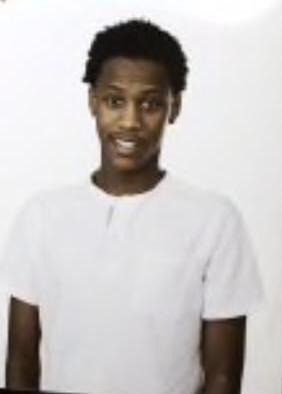
Randall Young was a 16-year-old boy from Chicago's West Englewood community, walking home with another teenager on a cool May evening when violence found them in a narrow alley. It was May 2, 2016, and the pair chose a familiar shortcut off the 7100 block of South Laflin Street on the city's South Side, a neighborhood where the sound of gunfire was tragically ordinary.
They were just moving east through the alley, close enough to feel like the night might pass uneventfully, when a stranger appeared and changed everything in a matter of seconds.
According to reports, a male assailant walked up to the two teenagers and opened fire at close range. Bullets tore through the quiet, striking Randall in both the head and chest while the other youth was grazed and knocked down in the chaos. Neighbors and first responders rushed to help, and both teens were taken to hospitals – the younger boy to St. Bernard Hospital, where his condition stabilized, and Randall to Advocate Christ Medical Center in Oak Lawn. Despite emergency efforts, Randall was pronounced dead at 10:55 p.m., roughly an hour after the shooting, his life ending not far from the 1300 block of West 73rd Street where he lived.
In the days that followed, his name joined a growing list of young people lost to gunfire in 2016, a year when Chicago's murders surged and violence in neighborhoods like West Englewood became a grim constant. Citywide, hundreds of people were killed, most in public places and often in circumstances that seemed sudden and senseless, part of a broader spike in gun violence that hit the South and West Sides hardest and left families and communities reeling. Clearance rates for homicides had fallen sharply compared with earlier decades, meaning more families were left without answers or accountability after losing someone they loved.
For Randall's family, the loss was not an abstraction but the end of a hopeful, complicated, ordinary teenage life. On an online memorial page, relatives and friends lit virtual candles and described a caring, funny youth with big ambitions. They recalled that he dreamed of rapping, of playing basketball, and even of becoming a neurosurgeon one day, a mix of artistic, athletic, and academic hopes that suggested he saw more than one possible future for himself. The comments there read like fragments of conversations abruptly cut off, love poured into a space that could not answer back.
The investigation into the shooting, however, stalled almost immediately. News coverage and later analysis of his case describe it as a chilling example of the city's growing number of unsolved homicides. Reporters noted that Randall's killer had not been found, and that no suspects had been identified or publicly named. His mother, April Campbell, tried to reach detectives with leads she had gathered herself, hoping that anything she'd learned might help, but she received no return call and no clear sense that the case was moving forward. Commentators would later point to her experience as emblematic of a wider crisis, in which grieving families were left to chase answers on their own while the person responsible for their loved one's death remained somewhere out in the city, uncharged and unnamed. As far as publicly available reports indicate, no one has ever been arrested for the murder of Randall Young, and the alley where he fell remains part of an unfinished story.