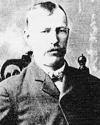
In the winter of 1908, the life of Albert Holindrake, a 43-year-old White/Caucasian male, came to an abrupt and tragic end in Park City, Utah. Having moved to the bustling mining town at the age of 22, he had built a life as a respected and well-liked citizen, known for being a quiet and law-abiding man. He was a devoted husband to his wife, Nancy, and a caring father to their children. These qualities likely led to his recent appointment to the Park City police force, a new chapter that was tragically cut short.
Just six days into his new role as a police officer, on the frigid morning of January 12, 1908, Holindrake was at City Hall with his partner, Frank Peterson, after completing their evening patrol. Shortly after 1:00 a.m., Peterson went to the basement to tend to the furnace, leaving Holindrake alone upstairs. Moments later, the sharp crack of a gunshot echoed through the building. Peterson rushed back upstairs to a grim discovery: Albert Holindrake was dead in his desk chair, his own police-issued. 38-caliber Colt revolver on the floor beside him. A single chamber of the weapon was empty.
The subsequent investigation and coroner's inquest were clouded with uncertainty. Officially, Holindrake's death was ruled an accident, the result of an unfortunate mishap with his own weapon. It was noted that he was inexperienced with firearms, and the theory was that he had been examining the new revolver when it accidentally discharged. The bullet struck him in the face, causing immediate and fatal injuries. There were no suspects or arrests, as the evidence pointed toward a self-inflicted wound, whether accidental or intentional.
However, whispers and conflicting reports suggested a deeper and more somber story. The local newspaper, the Park Record, reported that the bullet had entered through his mouth. The paper also indicated that Holindrake had spoken of taking his own life in the weeks leading up to his death. This led many to believe his death was not an accident, but a suicide. Despite these suggestions, the official ruling remained an accidental shooting, a conclusion that perhaps spared his grieving family the social stigma associated with suicide at the time. The community was left to mourn the sudden loss of a man described as a good and indulgent husband and father, leaving his family "almost prostrated by... terrible sorrow."