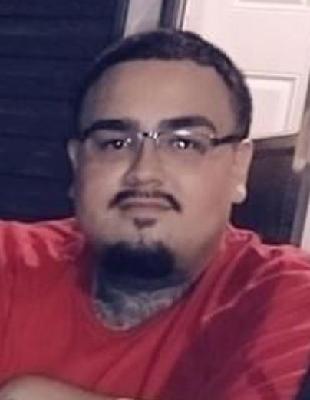
Hani N. Yousef, a 24-year-old Middle Eastern / Arab man, set out through Chicago's Southwest Side on the night of August 31, 2016, with another young man beside him in the car. It was late summer in the West Lawn neighborhood, and the two were driving near 65th Street and South Karlov Avenue when the routine motion of the evening broke into sudden danger.
Around 9:55 p.m., according to police and later news reports, gunmen in a dark SUV opened fire on their vehicle as it headed south on Karlov, turning an ordinary midweek drive into a deadly ambush.
Witnesses later told a neighborhood crime blog that the car carrying Yousef had been engaged in a tense chase with another vehicle, described as an SUV, circling back and forth around the same intersection before the shooting erupted. In the chaos, the victims' car sped away from the attack but did not get far; it crashed in the 4100 block of West Marquette Road, coming to rest in the front yard of a house, its front end smashed up against the steps of the home's porch. Neighbors awoke or stepped outside to the sight of a wrecked car on the lawn and the sound of sirens moving in.
Emergency crews rushed to the scene and found Yousef gravely wounded, shot in the chest. He was taken by ambulance to Holy Cross Hospital, where doctors pronounced him dead at 10:19 p.m., less than half an hour after the first shots rang out. His passenger, a 23-year-old man, had been grazed in the neck by a bullet but survived and was transported to Advocate Christ Medical Center in Oak Lawn, where his condition was reported as good. Public records later noted that Yousef lived in Burbank, in the 8200 block of South Luna Avenue, marking him as one of many suburban residents whose lives were claimed by violence inside the city that year.
In the first hours after the shooting, detectives worked under the glare of crime-scene lights, piecing together what had happened on that stretch of Karlov and Marquette. Police told reporters they believed the attack might be gang-related, and that both victims were known to have gang affiliations, suggesting the shooting was not random but part of a broader pattern of street conflicts playing out on Chicago's South and Southwest Sides. Even so, no one was immediately taken into custody, and coverage at the time emphasized that the gunmen in the SUV had escaped into the night without being identified. Years later, case-tracking and cold-case listings still describe Yousef's death simply as a murder under investigation by the Chicago Police Department, with no public record of an arrest or a named suspect connected to the killing.
His death unfolded against a grim backdrop. August 2016 was later described as one of Chicago's deadliest months in nearly two decades, with more than 400 people shot and over 70 killed, much of the bloodshed tied by authorities to gang rivalries and struggles over territory. In that torrent of violence, Yousef's case was one of many, but his name did not simply vanish into statistics. Online memorials preserve his photograph and basic details, inviting visitors to light virtual candles and leave messages, a small and quiet counterweight to the anonymous figures in crime tallies. On those pages and in unsolved-case databases, his story remains frozen at the moment when a night drive through West Lawn ended with a shattered car on a front lawn and a family in Burbank left to mourn.