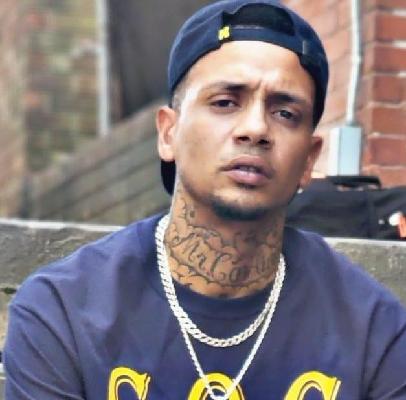
Milton Moffett Jr., a 40-year-old Black man from Savannah, Georgia, died on August 18, 2012, leaving behind a silence that must have felt unbearable to the people who loved him most. His death was not just the end of a life, but the sudden shattering of a family’s sense of normalcy. The public traces that remain show a man surrounded by loved ones, a husband, a father, a son, and a grandfather, whose absence would have been felt in every corner of the lives he touched. In the aftermath, his family was left to do the impossible: mourn someone deeply cherished while trying to make sense of a loss that came far too soon.
What survives in the public record is heartbreak more than explanation. There are the formal notices of his passing, the funeral arrangements, the names of those he left behind, and the solemn recognition that a family had been changed forever. Those details, though brief, paint the outline of a man whose life mattered greatly to those around him. Behind every obituary line is a story much larger than the page can hold, a home where his voice was once familiar, children and grandchildren who would carry his memory forward, and loved ones forced to reckon with grief that arrived without mercy.
His funeral at First African Baptist Church in Franklin Square would have been one of those painful moments when a community gathers to hold one another up because words alone are not enough. It is easy to imagine the weight in that room, the prayers, the tears, the stories shared in hushed tones, and the aching disbelief that someone so central to his family’s life was gone. For those closest to Milton, that day was likely not just about saying goodbye, but about trying to hold onto every piece of him they could: the sound of his laugh, the way he carried himself, the role he played in the lives of his wife, children, mother, and grandchildren.
What makes his story especially haunting is how little clarity appears in the public record about the circumstances surrounding his death. There is no widely available public account that fully explains what happened, and no clear public trail pointing to a suspect, an arrest, charges, a trial, or a conviction. That absence of answers leaves a different kind of wound, one that does not close easily. It means that beyond the grief of losing Milton, there is also the lingering pain of uncertainty, the kind that keeps families awake at night and leaves them searching for meaning in a silence that never should have existed.
So Milton Moffett Jr.’s story, as it stands in public view, is one marked by both love and unresolved sorrow. He is remembered not through sensational details, but through the people who survived him and the space his death carved into their lives. The facts that remain may be limited, but the human loss behind them is not. His death stands as a reminder that every name in the record belonged to a real person with a family, a history, and a future that should have stretched much farther than it did.