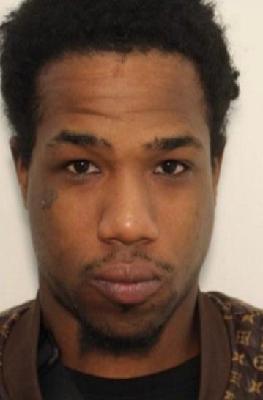
Nicola Sinis, a 43-year-old White man from Atlanta, Georgia, is remembered in the public record through the bare and haunting outline of a homicide that never seems to have found its ending. The details that survive online are painfully limited, and that scarcity gives the case an especially mournful weight. There is no rich public narrative explaining how his last day unfolded, no widely circulated account that fully captures the moments leading up to his death, and no clear public story that restores shape and meaning to what was lost. Instead, what remains is the difficult truth that a man died violently, and the world moved on with far more questions than answers.
There is something especially heartbreaking about cases like this, where a person’s name remains visible, but the life behind it is left mostly in silence. Nicola Sinis does not emerge from the available public material as a fully told story, but as a fragment, a life interrupted and then preserved only in scattered records. That kind of absence can feel as tragic as the crime itself. It leaves behind the sense of unfinished business, not only for investigators, but for anyone who pauses long enough to see the human being behind the listing. A death should never be reduced to a line in a database, yet that is often what happens when time passes and a case grows cold.
From the online information available, the case appears to remain unsolved. No clear public record points to an arrest, a named suspect, a prosecution, or a conviction tied to his killing. That silence speaks loudly. In most homicide cases where police identify someone responsible, some trace usually remains in public view: a news report, a booking, a court hearing, a trial, a verdict. Here, that trail does not seem to appear. The absence of those milestones leaves the impression of a case that stalled before it ever reached justice, a case that never gave the victim’s name the public reckoning it deserved.
That unresolved status adds an aching dimension to the story. It means Nicola Sinis is not only someone who died, but someone whose death appears to have been carried forward without public resolution. For loved ones, that kind of uncertainty can become its own long shadow. Without an arrest, without a courtroom, without an answer that can be spoken plainly, grief is forced to live beside doubt. Every unsolved case leaves behind that cruel tension between memory and mystery, between mourning the person who is gone and wondering whether the truth will ever fully come to light.
There are indications online that a man by the same name had an older criminal history in federal court records, but nothing in the public material available ties that history to a solved outcome in his death. So the central reality remains unchanged: Nicola Sinis was killed, his case appears to remain open in the public record, and no publicly documented suspect or successful prosecution has surfaced in the accessible material. That makes his story feel less like a closed chapter and more like a page left unfinished, still waiting for the final lines that never came.
What lingers most is not just the mystery, but the sadness of how incomplete the public portrait is. Behind the name was a real person who lived in Atlanta, moved through the world, and mattered to someone. Even when the official details are thin, that truth remains. His death was not just an entry in an unsolved file. It was the violent ending of a human life, and the lack of a clear answer only deepens the tragedy. In that way, the story of Nicola Sinis is not simply about a homicide with few details. It is about how loss can echo when justice stays out of reach, and how some names remain suspended in public memory, waiting for the day when the silence around them is finally broken.