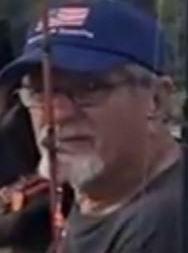
Ricky Dale Milner, a 53-year-old White male law enforcement officer from Bryan County, Oklahoma, had built a life rooted in small-town service long before the February afternoon when everything turned back toward him. On Friday, February 23, 2024, he was discovered at the Achille Volunteer Fire Station in Achille with a gunshot wound to the head, transforming a familiar workplace into the focus of a major law-enforcement response.
State and local agencies converged on the fire station, and the Oklahoma State Bureau of Investigation was called in to look into what was immediately described as an officer-involved incident, with early reports noting that the victim’s identity and whether the wound was self-inflicted were initially unknown.
In the hours and days that followed, the picture became clearer but no less somber. The fallen officer was identified publicly as Rick Milner, a member of the Achille Police Department and a resident of nearby Caddo. Investigators announced that there was no suspicion of criminal activity and, in local reporting, officials emphasized that no foul play was suspected in his death. With that conclusion, the scene at the fire station was treated as a tragic loss rather than an active manhunt, and authorities did not announce any suspects, person of interest, or arrests connected to the shooting. Advocacy and case-tracking sites later cataloged the incident as a “death by force” tied to Achille, but their own descriptions note that specific circumstances have not been made public, and they solicit information from the community rather than report any charges or suspects.
Behind the headlines was a long story that began in Sherman, Texas, where Milner was born on August 25, 1970, to Wesley Lynn Milner and Sandra Lee Weber. He grew up in the Tom Bean and Howe area of Grayson County, attending school in both Denison and Sherman before stepping into the working world. As a young adult he hired on to cattle ranches in West Texas and the Panhandle, years that shaped his love for bronc horses, rodeo life, leatherwork and the high-top boots that came with it. Those early ranch and rural experiences never really left him, even as his path drew him toward law enforcement.
Determined to move into policing, he paid his way through a Texas police academy in the early 1990s by working security jobs, then broadened his skills with training as an electrical lineman and a railroad conductor. He tried those trades for stretches of his thirties and forties, but again and again he came back to the badge. Over the years, he served with sheriff’s offices in Grayson, Fannin and Bryan counties and with municipal or campus agencies including the departments in Bells, Honey Grove and Trenton, Texas, the Southeastern Oklahoma State University campus police, MCSO security, and the police department in Achille. Colleagues and community members would later remember him as the kind of officer called for everything from locked car doors to medical emergencies, someone who might just as easily steer a bad decision back onto the road as respond to a crisis.
His life at home was rooted in family. On October 7, 2000, he married Trisha Rayleen in the small community of Jumbo, Oklahoma, and together they built a blended life that stretched across Caddo, Durant, Denison and other pockets of Texoma. He was a father and grandfather whose household gatherings centered on food, stories and a steady stream of projects. Off duty, he was known for leatherwork, an interest in firearms, and painstakingly built model trains and model cars. On holidays and weekends he was the one arriving with pans of smoked brisket or slow-cooked cocktail sausages, feeding relatives and friends who had come to rely on him both at the table and in emergencies.
The days after his death were marked by quiet ritual rather than courtroom developments. A family visitation was held at Gordon Funeral Home in Durant, and a funeral service followed at the Bell Tower Event Center, with relatives and friends serving as pallbearers and a local pastor officiating. Obituaries and memorial pages described the loss in the language of family—listing his wife, children, grandchildren, siblings and extended kin, and recalling the elders who had preceded him in death—while case-tracking sites filed his name among Achille’s violent deaths and left open forms inviting updates, reflections and any new information. Together, those public traces tell a story less of a solved crime than of a sudden, on-duty death that drew intense scrutiny, ended with an official finding of no foul play and no suspects, and left a community to remember a long-serving officer more for the lives he touched than for the unresolved questions surrounding his final moments.