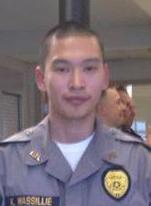
Kyle Wassillie, a 26-year-old male, a Yup'ik Alaska Native from Nunapitchuk in the Yukon–Kuskokwim Delta, spent the last evening of his life in Napaskiak, a small village a short ride south of Bethel. He was off duty from his work as a village police officer, visiting during a summer weekend when people from nearby communities had come through because of an unusual gray whale that had traveled up the Kuskokwim River. As night bled into morning on July 30, 2017, he carried bottles of liquor with him and moved from place to place, at one point cooling off in protective custody after drinking. Eventually he arrived at a house tied to the Williams family, where more drinking and a rising tension settled in.
Inside that home, the mood snapped. A 9-year-old boy would later tell a responding village public safety officer that his older brother had shot a man. When the officer entered, he found Kyle Wassillie, the 26-year-old male, lying in the entryway, a bullet through his chest and stomach, breathing shallowly as health aides worked to help him. The rifle believed to have fired the shots sat in the kitchen; an empty casing rested by the body; large, drained bottles of vodka were scattered about the scene. Outside, a neighbor said he had heard a first shot and then witnessed a second through a window. An hour later, the July light still high over the river, Wassillie was gone.
Alaska State Troopers and prosecutors moved quickly. Adam Williams, a 19-year-old from Napaskiak, was arrested that day and charged with first-degree murder, his bail set at $100,000 in cash with a third-party custodian. At arraignment, the Bethel district attorney told the court that witnesses had seen Williams fire into the 26-year-old male with a rifle while intoxicated, and that more than one shot had been fired. For the grieving family, early reports were blunt and spare: an off-duty village police officer, 26, shot and killed on a Sunday in a village just beyond Bethel.
The case took nearly three years to reach trial. Williams remained jailed for two and a half of those years as lawyers changed and a new public defender took over the file. When the Bethel jury finally heard the testimony, the defense argued self-defense: that the 26-year-old male, heavily intoxicated, had started a fight; that Williams, also drunk and with little memory, pushed him outside, retreated, and then loaded a rifle inside the home, where the confrontation resumed and the fatal shots were fired. The state countered that Williams beat Wassillie down and fetched the gun before shooting, but the jury sided with the self-defense narrative. On January 15, 2020, a Bethel jury acquitted Adam Williams of first- and second-degree murder.
In the weeks after the verdict, life in the delta carried its stubborn rhythm. Williams returned home in a caravan of snowmachines, while miles away a mother drove the frozen river and learned by phone that there would be no prison time for the man who shot her son. She kept caring for her grandchildren and telling stories about the 26-year-old male who hunted and cut wood, a man whose smile and teasing could fill a room. Justice, for her, felt unfinished; for the courts, the matter was closed. In Napaskiak and Nunapitchuk—villages stitched together by river ice, summer water, and the memory of a Sunday morning—people remembered an officer's graduation photo, a family house filled with cousins, and the way alcohol and anger can narrow a night to a single, irreversible moment.