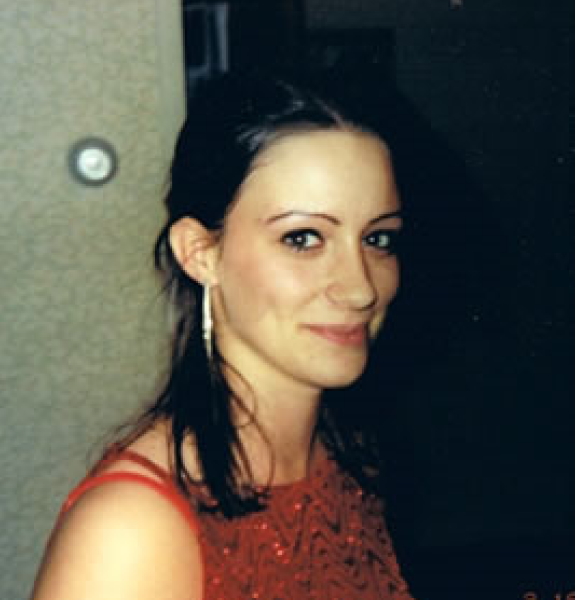
A woman discovers her roommate murdered In the summer of 1971, Rita Curran, a 24-year-old Caucasian female, was embracing a new chapter of her life in Burlington, Vermont. A beloved second-grade teacher, she had moved out of her parents' home for the first time and was living in an apartment on Brookes Avenue with three roommates. During her summer break, she was taking graduate courses at the University of Vermont and working as a chambermaid at a local motel.
In the late evening of July 19th, after attending a rehearsal with her barbershop quartet, Rita returned to her apartment. Her roommates invited her out for a late-night drink, but feeling tired, she declined and prepared for bed. This decision would leave her alone in the apartment for a fateful 70-minute window.
Sometime between 11:20 p.m. on July 19th and 12:30 a.m. on July 20th, an intruder entered the unlocked apartment. When her roommates returned, they initially didn't notice anything amiss. It wasn't until one of them went to their shared bedroom that the horrific discovery was made. Rita Curran was found on the floor, having been brutally beaten, sexually assaulted, and strangled to death. The scene told the story of a violent struggle; her room was in disarray, and evidence indicated she had fiercely resisted her attacker. The cause of death was determined to be asphyxia by manual strangulation.
The initial investigation into Rita's murder shook the quiet community of Burlington. Police interviewed numerous individuals, including neighbors, and followed up on hundreds of tips. Among those questioned was William DeRoos, a 31-year-old man who lived in an apartment two floors above Rita with his new wife. DeRoos and his wife told police they had been home all night and had heard nothing. With no concrete leads, the case went cold, haunting the Curran family and the Burlington Police Department for decades. Over the years, several potential suspects were considered, including the infamous serial killer Ted Bundy, who had been born in Burlington. However, no evidence ever linked him to the crime. Rita's parents passed away without ever knowing who was responsible for their daughter's death.
More than five decades after the tragic event, a breakthrough finally came thanks to advancements in DNA technology. In 2014, evidence from the crime scene, including a cigarette butt found near Rita's body, was sent for DNA analysis. A male DNA profile was developed but it didn't match anyone in the national DNA database. In 2019, a new team of detectives revisited the case and utilized genetic genealogy. This process led them back to William DeRoos. Investigators located a half-brother of DeRoos who provided a DNA sample, which confirmed that the DNA on the cigarette butt belonged to William DeRoos. The same DNA profile was also found on Rita's torn housecoat.
With this new evidence, investigators re-interviewed DeRoos's ex-wife. She admitted that she had lied to the police in 1971. On the night of the murder, she and DeRoos had an argument, and he had gone out for a "cool down walk" during the time Rita was alone. When he returned, he instructed her to tell the police he had been home the entire time. Shortly after the murder, DeRoos and his wife left Vermont. He eventually moved to Thailand and became a Buddhist monk before returning to the United States. In 1986, William DeRoos died of a drug overdose in a San Francisco hotel. While he would never face justice in a courtroom, the Burlington Police Department officially announced in February 2023 that they had solved the 51-year-old cold case, naming William DeRoos as the sole perpetrator of Rita Curran's murder.