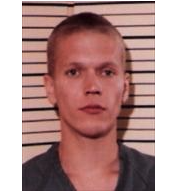
Scott Jason Curts, a 29-year-old white male, spent his final moments in east Tulsa on the night of September 15, 2007, near the Birch Place Apartments by the intersection of East 31st Street and South Garnett Road. He did not die inside a home or in the anonymity of a distant roadway; instead, he fell in a patch of grass outside the complex, close enough to everyday life that his death immediately stood in stark contrast to the ordinary apartment setting around him.
When officers arrived, they found Curts lying face down on the ground, his body bearing multiple gunshot wounds that left little doubt that he had been the target of a sudden and violent attack.
The scene told a story even before witnesses could. Near a vehicle associated with Curts, investigators discovered broken glass and scattered shell casings, the kind of debris that suggests a confrontation escalating in a matter of seconds. From these clues, it appeared to them that whatever argument or struggle began, it started at or around the car and then violently spilled outward. Curts seemed to have turned and run, managing to cover roughly thirty to forty feet across the grass in a desperate attempt to get away before his injuries overwhelmed him and he collapsed where officers later found him. The layout of the scene—car, glass, casings, and the distance between the vehicle and his body—gave the impression of a brief, chaotic flight cut short by gunfire.
In the aftermath, detectives treated the area around the apartments as a fragile puzzle. The car became a focal point, as did the pattern of the shell casings and the shattered glass, all of it hinting at an altercation that erupted quickly and left no time for intervention. Yet, for all the physical evidence, what was missing was just as striking: there was no immediate, clear narrative about who had confronted Curts or why. No widely reported confessions, no identified assailant stepping out of the shadows, and no public indication of a straightforward motive emerged from the early investigation. The violence appeared sudden and targeted, but from the outside, it remained opaque, an argument by a car that ended with a man dying alone in the grass.
Over time, Curts’s death became known as one of the unsolved homicides from 2007 in Tulsa, a case that lingered without the closure of a named suspect or a day in court. Case summaries and public appeals have described the killing as an open investigation, emphasizing that no one has been arrested or publicly identified as responsible for the shooting. Police and advocates have repeatedly urged anyone who might know something—no matter how small—to come forward, often directing potential tipsters toward anonymous reporting options such as local Crime Stoppers programs in hopes that someone, somewhere, might be persuaded to share what they saw or heard that night.
Years later, Curts’s case still appears in public listings of unsolved deaths, with updated entries confirming the same stark essentials: his name, his age, the September 15, 2007 date, the Birch Place Apartments setting, and the fact that he died from multiple gunshot wounds after an apparent confrontation by a car. Those brief lines, maintained and refreshed in recent years, underscore not only that he lived and was violently killed, but that the person or people who shot him have not yet been brought to justice. The continued presence of his case in these records stands as both a memorial and a quiet plea—a reminder that behind the few known details lies a life cut short and a story that, for now, still lacks its ending.