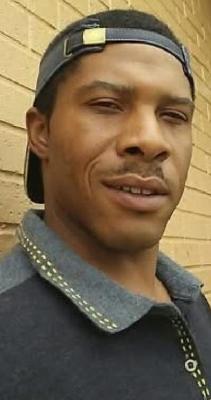
Roberto Aguliar Gonzalez, a 28-year-old Hispanic male, was found dead inside his Oklahoma City home on October 3, 2008. What should have been an ordinary day in his neighborhood ended with police and crime scene tape surrounding his residence, the quiet of the street broken by the arrival of officers and investigators called to check on a report that something was terribly wrong.
Inside the home, they discovered Roberto, shot multiple times, his life cut short in a sudden burst of violence that left more questions than answers. His death was quickly ruled a homicide, a deliberate killing rather than an accident or self-inflicted act, and from the start the case carried the weight and urgency of a young life stolen.
Investigators focused their attention on the house and its immediate surroundings, carefully documenting the scene where Roberto's body had been found. The fact that the shooting occurred at his residence suggested that whoever came to his door that day either knew him or was willing to invade the supposed safety of his home. Early reports indicated that he had been shot multiple times, a detail that hinted at both the ferocity of the attack and the determination of the person or people responsible. Even in those first hours, detectives were working against time, trying to preserve fleeting traces of evidence before they were lost forever.
As the Oklahoma City Police Department began piecing together the final hours of Roberto's life, the motives behind the attack remained murky. Publicly available summaries note that the circumstances were “tragic” and emphasize that the details surrounding both motive and suspects were not immediately clear. Another linked piece of local coverage from that period shows police appealing for information in a robbery-related shooting death, signaling that investigators were at least exploring the possibility that Roberto's killing was tied to some form of robbery at or around his home. What is certain from the record is that police reached out to the community, asking anyone who knew anything about the robbery and shooting to come forward, hoping that a neighbor's memory or a small detail might point them toward whoever was responsible.
Despite those efforts, the case did not break quickly. The initial flurry of leads and interviews gradually gave way to a more methodical cold case review as months turned into years without a clear suspect. Roberto's case was eventually categorized among the unsolved homicides that continued to be revisited by detectives, its status explicitly marked as “not solved” and updated as recently as 2025 in public databases devoted to cold cases in Oklahoma. That ongoing classification underscores that, in the public record, there have been no reported arrests and no officially identified primary suspect or suspects connected to his killing.
Today, Roberto Aguliar Gonzalez's death remains an open wound in the history of Oklahoma City's unsolved homicides. The bare facts available to the public form only the outline of a life interrupted: a young man in his late twenties, gunned down in the place where he should have been safest, his case still carried forward as an unsolved homicide by the Oklahoma City Police Department and by organizations that track cold cases. The lack of closure means that somewhere, there are people who knew him who have had to move through the years without answers, while investigators and advocates continue to keep his name in circulation, hoping that time, memory, or new information will finally reveal who came to his door that day and why.