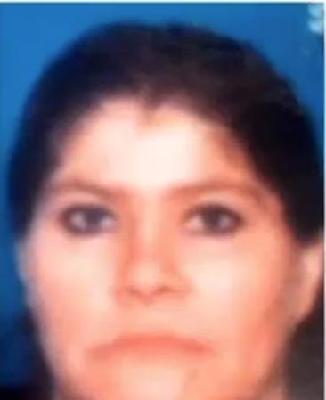
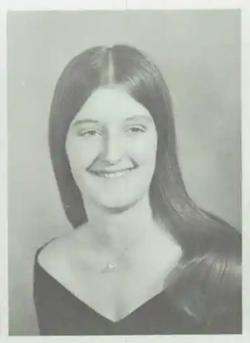
Elizabeth L. “Beth” Nelson Cornelius, a 34-year-old white woman from Edmond, Oklahoma, had built a busy, family-centered life long before her name appeared in crime reports. Friends and relatives remembered her as a devoted mother, wife, daughter, and sister, born in Edmond on February 12, 1980 to Doug and Kathy Nelson. She went through Edmond Public Schools and graduated from Edmond Memorial High School, later working as an office manager at Total Security Center in Norman.
Her world revolved around her husband, Ricky Cornelius, her two young sons, Austin and Trey, and an extended family that included sisters, grandparents, nieces, nephews, and cousins. She was deeply involved in the BMX racing community, where weekends were often spent at tracks and events; that “BMX family,” as mourners called it, became a second home and a circle of friends who would later grieve her loss together.
On Sunday evening, April 6, 2014, Beth was in northwest Oklahoma City, sitting in a vehicle with her friend Allen Galbreath on Northwest 27th Street. What began as an ordinary night turned violent in an instant. According to police, a man later identified as Steven Rivera walked past their parked vehicle and became embroiled in some kind of confrontation with the people inside. Witnesses and investigators described it as an argument that escalated with little warning. In the close quarters around the car, Rivera produced a knife and attacked both occupants, stabbing Beth and Galbreath before anyone nearby fully understood what was happening.
Despite her injuries, Beth managed to drive away from the immediate scene, making it to a convenience store at Northwest 23rd Street and Robinson Avenue, a short distance south of where the attack began. Emergency responders were called, and she was taken from the store to OU Medical Center, but the wounds she had suffered were too severe; she was pronounced dead at the hospital. Galbreath, found back at the original location on Northwest 27th, was transported separately to a local hospital and survived in stable condition. For her family in Edmond, the news that evening came not as the result of a long illness or accident, but of a sudden act of violence that shattered the normalcy of a spring weekend.
The attack might have continued, or even spread to others in the neighborhood, if not for the intervention of an off-duty law enforcement officer who happened to be nearby. An off-duty Choctaw Nation officer, visiting his mother in the area, heard cries for help and went outside to investigate. He saw Rivera still armed with the knife and confronted him in the street. Without his service weapon, he relied entirely on a bluff and his command presence, shouting at Rivera to drop the knife or be shot. Believing the officer was armed, Rivera stopped and surrendered. Patrol officers arriving on scene then took him into custody without additional violence. Police later emphasized that the off-duty officer had risked his own life by walking toward a man with a knife while unarmed, but his split-second decision effectively ended the assault and prevented further injuries.
In the hours that followed, detectives pieced together the basic facts: the victims had been sitting in their vehicle, the suspect had approached from the street, there was no prior relationship between Rivera and Beth, and the violence appeared to have been unprovoked beyond the brief verbal clash that preceded it. Rivera was booked into the Oklahoma County Jail on complaints of first-degree murder for Beth’s death and assault with a deadly weapon for the stabbing of Galbreath. Local coverage in the years that followed would describe the crime as a “random stabbing” that claimed the life of an Edmond mother, and case summaries now list it as solved, noting that Rivera was ultimately convicted and given a decades-long prison sentence, ensuring he would spend much of the rest of his life behind bars.
While legal proceedings moved through the courts, Beth’s family and community focused on mourning and remembrance. Her obituary spoke not of the details of the attack but of the life she had lived: her love of family gatherings, her enthusiasm at BMX tracks, the children she left behind, and the trust and benefit fund established in her name to help care for her sons. Friends left condolence messages recalling shared jokes, long conversations, and a presence they described as warm and outgoing. For those who knew her, the story of April 6, 2014 is not only the narrative of a street-side confrontation and a rapid police response; it is the abrupt ending of a life woven tightly into a family, a sport, and a community that still carries her memory forward.