Crime Solvers Central
302 Cases Solved. Advancing justice for missing persons, unsolved homicides, unidentified and unclaimed remains.

Case Description

Any updates on this case? Let us know!
Summary based on 5 sources
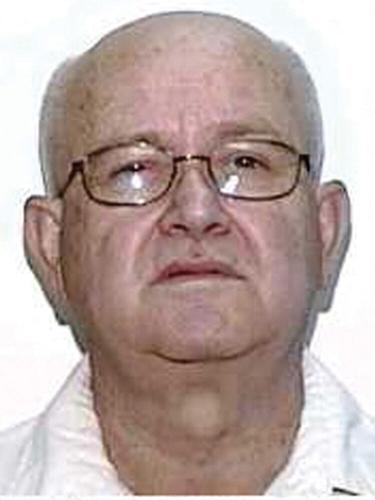
Raymond Darby was a familiar and friendly face in his north Oshawa, Ontario, neighbourhood. At 72, the General Motors retiree was a longtime resident who lived a quiet life in his home on the corner of Maine Street and Ritson Road. After suffering a stroke, he walked with the aid of a cane and was no longer able to drive, but he remained a fixture in the community. Neighbours often saw him out for a walk, handing out biscuits to dogs and always ready to engage in conversation with anyone who had the time. He had been predeceased by his wife and two daughters and lived a solitary life, with a small circle of close friends.

On the evening of June 17, 2013, neighbours saw Mr. Darby walking up his driveway around 7:30 p.m. It was the last time anyone would see him alive. The next morning, June 18, a friend arrived at his home to give him a ride to a scheduled dentist appointment. When Mr. Darby didn't answer the door, the friend became concerned and got a neighbour who had a key. Together, they entered the house and began calling out for him. They eventually made their way to a bedroom, where they made a grim discovery: Mr. Darby was dead.

Durham Regional Police were called to the scene, and what was initially a sudden death investigation quickly turned into a homicide case. Investigators revealed that Raymond Darby, a man known for his gentle nature, had been the victim of a violent attack and was stabbed to death inside his own home. Police forensic investigators spent several days combing through the residence for evidence, while officers canvassed the neighbourhood, speaking with those who knew the friendly senior. The news of the violent crime rocked the quiet community, prompting a neighbourhood safety meeting at a local church to address residents' fears.

The investigation into Mr. Darby’s murder presented immediate challenges for the Durham Regional Police homicide unit. He lived a life largely disconnected from modern technology; he had no internet and no cellphone, leaving behind a minimal digital footprint for detectives to follow. His habit of talking to strangers and his small social network made it difficult for police to piece together his activities and contacts in the days leading up to his death. Investigators learned that Mr. Darby was known to talk about having money and rarely locked his front door, which led them to consider robbery as a possible motive. However, because so few people had been inside his home, it was difficult to determine if anything had been stolen.

In the years following the murder, Durham police have made several public appeals for information. On the first and second anniversaries of his death, they reiterated their call for anyone with knowledge of the case to come forward. "It’s been two years. We don’t have any new information to act on, but somebody out there knows something," a police spokesperson said in 2015. Investigators believe that even a small, seemingly insignificant detail could be the key to breaking the case open. "Sometimes, the smallest thing can start us in the right direction," a detective stated in a 2018 interview.

As of December 2018, five and a half years after the brutal killing, the case of Raymond Darby’s murder remained an active but unsolved investigation, with no arrests made. The file is one of many cold cases that detectives continue to work on, hoping that with the passage of time, someone’s conscience or circumstances may change, and they will finally come forward with the truth. A cash reward of up to $2,000 is available through Durham Regional Crime Stoppers for tips that lead to an arrest. Anyone with information is urged to contact the Durham Regional Police Homicide Unit at 1-888-579-1520 ext. 5418 or to remain anonymous, call Crime Stoppers at 1-800-222-8477 (TIPS).