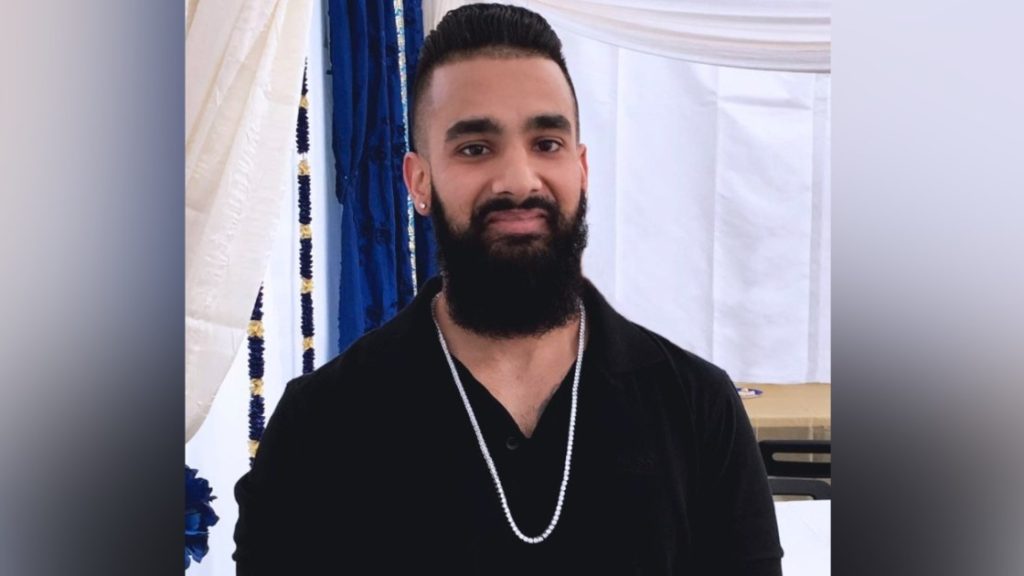
In the summer of 1998, in the Clayton Heights neighborhood of Surrey, British Columbia, Ryan Charles Therrien, a 28-year-old male, was living in a home on 76th Avenue. The quiet residential street, part of a rapidly growing city, was a landscape of suburban life in the Lower Mainland. But on Thursday, July 30, 1998, the peace of that home was violently shattered. In an act of brutality that has remained unexplained for decades, Ryan was beaten to death inside his own residence.
The initial investigation into Ryan’s homicide was handled by the Surrey detachment of the Royal Canadian Mounted Police (RCMP). In 1998, Surrey was grappling with the challenges of a burgeoning population, and its police force was responsible for a wide array of complex criminal cases. Investigators would have processed the scene at Ryan's home, located at 18918-76th Avenue, collecting evidence and seeking to understand the final moments of his life. They would have interviewed family, friends, and neighbors, attempting to build a picture of who Ryan was and why someone would target him with such violence.
Despite the initial efforts of the RCMP, the investigation into Ryan Therrien's murder eventually stalled. No suspects were publicly identified, and no arrests were made. As leads dried up and new cases demanded immediate attention, Ryan’s file was moved to the ranks of the unsolved. It became a cold case, a silent testament to a life cut short and a family left without answers. For years, his case file sat alongside dozens of others, waiting for a new tip, a scientific breakthrough, or a fresh set of eyes that might finally break the silence.
The 1990s in Surrey saw a number of violent crimes that remain unsolved, creating a legacy of unresolved grief for many families in the community. Ryan's murder was one of several that year, each leaving a permanent scar on the city's history. These cases represent a challenging era in law enforcement, a time before the widespread use of advanced forensic technologies like comprehensive DNA databases and digital forensics that aid modern investigations.
For more than two decades, the file on Ryan's murder remained with the Surrey RCMP. However, a major shift in the city's policing landscape brought renewed attention to these historical cases. In a significant transition, policing duties for the city began to move from the long-standing RCMP detachment to the newly created Surrey Police Service (SPS). As part of this change, the responsibility for investigating the city's historical unsolved homicides was also transferred.
As of October 2024, the investigation into the murder of Ryan Charles Therrien is now in the hands of the Surrey Police Service. His case is one of 56 unsolved homicide files, dating from 1970 to 2003, that were officially handed over by the RCMP. This transfer represents a new chapter in the long search for justice. Investigators with the SPS will now be tasked with reviewing the decades-old evidence, hoping that a fresh perspective, coupled with advancements in forensic science, might uncover the lead that has been missing for over a quarter of a century. The hope remains that someone, somewhere, holds the key to understanding what happened in that Surrey home and can finally bring closure to the tragic and unsolved murder of Ryan Therrien.