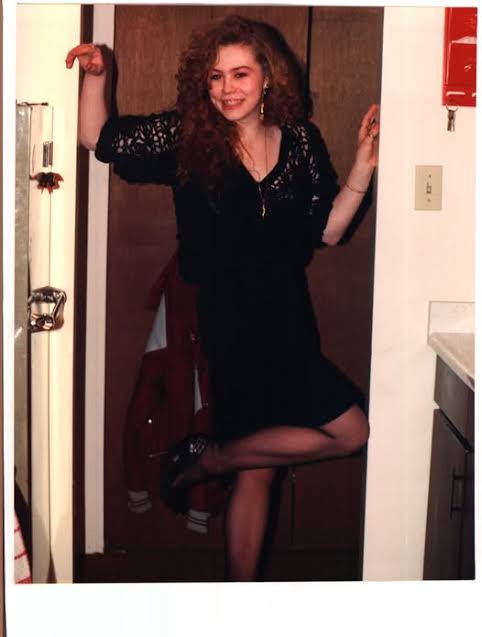
Tracy Olajide was a 30-year-old mother remembered for her beautiful smile and quick sense of humor. A long-time resident of Vancouver, British Columbia, she was a staple in the Downtown Eastside community. In her youth, Tracy was an award-winning athlete, a model, and a singer who helped organize the Vancouver Black Achievement Awards and worked with Black Theatre West. Though she struggled with addiction, she had made efforts to leave sex work behind. Her friend remembers her as someone who was quick to crack a joke and make people laugh. Tracy, a Black woman, was a mother to a son who, years later, is described as accomplished and brilliant.
On the evening of Thursday, August 10, 1995, Tracy was seen for the last time near the Waldorf Hotel in Vancouver. Two days later, on August 12, her nude body was discovered on a trail beside the remote Morris Valley logging road, about 15 kilometers north of Harrison Mills, near Agassiz.
She had been sexually assaulted and strangled to death. None of her loved ones had reported her missing in the short time between her disappearance and the discovery.
Tracy’s murder was the first of three that police would link together, a series that became known as the "Hemlock Valley Murders." All three victims were women from Vancouver's Downtown Eastside who were found in remote areas of the Fraser Valley in the summer and fall of 1995. On September 2, the body of 24-year-old Tammy Pipe was found near a hang-glider launch on Mount Woodside. Then, on October 21, the partially decomposed body of 35-year-old Victoria Younker was located down an embankment off a logging road near Mission. Like Tracy, both women had been sexually assaulted and strangled.
The Royal Canadian Mounted Police (RCMP) took charge of the investigation, which was eventually handled by the Missing Women Task Force under the name Project Evenhanded. Investigators quickly theorized that a single serial killer was responsible. The killer was believed to have an intimate knowledge of the rugged backroads between Agassiz and Mission, leading police to suspect he may have been a hunter, fisherman, or someone who worked in the forestry industry or for a local correctional institution.
Key evidence pointed to a suspect who drove a red four-wheel-drive vehicle or pickup truck, as red paint chips were found at the crime scenes. The rough terrain would have been difficult for a regular car to navigate. Police also found tiny flecks of weathered yellow material, possibly from rain gear used to wrap the bodies. Most importantly, investigators recovered the killer's DNA from the scenes associated with Tracy Olajide and Tammy Pipe. This DNA profile ruled out several persons of interest, including a local roofer in 2001 and, most notably, serial killer Robert Pickton in November 2000.
On the 15th anniversary of the murders in 2010, the RCMP made a public appeal for information, releasing details about the suspect vehicle and the yellow rain gear in the hopes of jogging someone's memory. "It's been a tough investigation," said RCMP Sgt. John Cater at the time, noting that numerous persons of interest had been thoroughly examined and excluded. Police stated they believed someone in the community held the information that could finally move the case forward.
As of May 2025, the murders of Tracy Olajide, Tammy Pipe, and Victoria Younker remain unsolved. The DNA profile of the man who killed them has never been matched. The RCMP continues to appeal to the public for any information, no matter how insignificant it may seem. Anyone with a tip is urged to call the RCMP Missing Women Taskforce tip line at 1-877-687-3377.