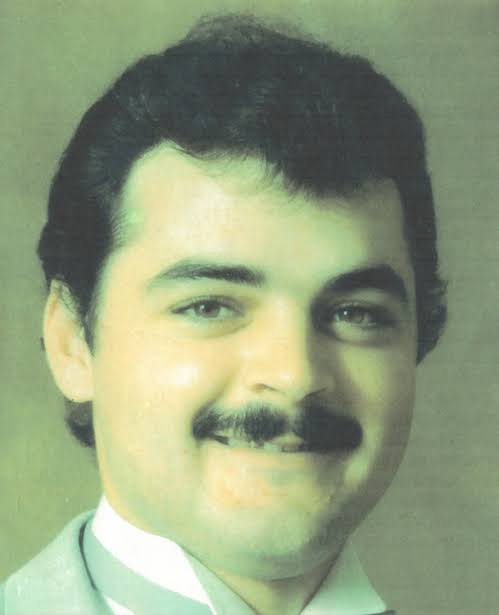
Joe Grozelle was a bright and promising 21-year-old man with a clear path ahead of him. A third-year officer cadet at the Royal Military College (RMC) in Kingston, Ontario, Joe was known for his dedication and athleticism. He was a valued guard on the varsity basketball team, a good student studying to become a logistics specialist, and a loving son and brother, the fourth of five children raised on a farm near Ridgetown. By all accounts, he was a well-adjusted young man with a long-term girlfriend, no financial troubles, and a close-knit group of friends and family who adored him. His family remembers a happy, driven individual with no history of emotional distress.
The mystery of his death began in the early morning hours of October 22, 2003. Joe vanished without a trace from his dormitory room on the RMC campus. The last person known to have seen him was his girlfriend, who had been studying with him in his room. She told investigators she fell asleep and awoke around 5:30 a.m. to find him gone. His disappearance was completely out of character, and concern grew when he failed to show up for basketball practice later that day. For 22 agonizing days, his family and friends waited for answers. The search ended tragically on November 13, 2003, when his body was recovered from the frigid waters of the Cataraqui River, near the college.
The Canadian Forces National Investigation Service (NIS), which led the initial inquiry, quickly concluded that Joe Grozelle had died by suicide. His family, however, never believed it. They pointed to troubling inconsistencies and evidence that suggested a more violent end. Their relentless pursuit of the truth would expose deep flaws in the first investigation and keep the case from being forgotten. The family hired their own lawyer and private investigator, meticulously compiling evidence that raised serious questions about what truly happened to Joe.
Their efforts led to the highly unusual step of exhuming Joe's body from Greenwood Cemetery in November 2004 for a second, more detailed autopsy. This examination documented injuries that the first had seemingly overlooked: blunt-force trauma to his face, a chipped front tooth, a scrape on his nose, and a deep discoloration on his upper lip. Pathologists testified that these injuries could have been caused by a punch. Furthermore, the condition of his body was inconsistent with having been in the water for 22 days, and a full meal was found in his stomach that could not be accounted for. Three of his shirts and a belt were missing and have never been found.
In 2007, a coroner's inquest jury officially overturned the military's suicide ruling. After hearing the conflicting evidence, the jury found the cause of death to be "unascertained, non-natural causes" and the manner of death "undetermined." Despite this, the case grew cold. Over the years, the family continued to fight for answers, prompting reviews by the RCMP and the Military Police Complaints Commission. The case was also taken on by the Cold Case Society at Western University, which produced a report that helped push for the file to be reopened.
The family’s persistence paid off. In 2020, following a letter from Joe’s sister, Nikki, Ontario's chief coroner ordered a new investigation under the province's concealed homicide review framework. In early 2022, the Ontario Provincial Police (OPP) officially took over the case, assigning a new team led by Det.-Insp. Shawn Glassford to conduct a fresh review of all the evidence. The family has expressed renewed hope that this new investigation may finally provide the answers they have sought for two decades.
As of October 2023, the OPP investigation into the death of Joe Grozelle remains active and open. His family maintains a website, "Veritas for Joe," to share information and keep his memory alive. They still hold onto boxes of his belongings, including his laptop, a broken watch, and the clothes he was wearing when he was found, hoping they might one day yield a clue. For two decades, they have been haunted by the simple questions of how, where, and why he died. No arrests have ever been made, and the full story of what happened to the promising young cadet in the fall of 2003 remains an unsolved mystery.