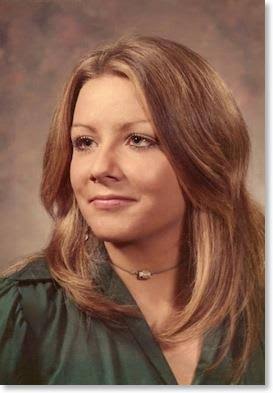
In the small, northeastern Iowa town of Waverly, the summer of 1971 began with a sense of unease that would linger for years. It was a time and place where neighbors knew each other, and children played freely until dusk. That sense of security was shattered by the disappearance and murder of Valerie Lynn Klossowsky, a 14-year-old female who was on the cusp of her high school years.
A thoughtful and creative girl, Valerie was known for her love of music; she played both the guitar and piano, and filled notebooks with her own songs and poetry about peace and love. Though quiet, she was athletic and active, often seen playing with friends in her well-kept neighborhood, just a few blocks from the campus of Wartburg College.
Sunday, June 13, 1971, was a warm summer day that Valerie spent with friends. She had a picnic in a local park with her friend LuAnn Hicks, and they spent the afternoon walking around town. Later that evening, another friend, Cindy Newgren, came by Valerie’s home on Fifth Street N.W., where she lived with her father, two sisters, and paternal grandmother. The two girls headed to the local swimming pool. According to her friend, Valerie was seen talking to a group of people outside the pool before she told Cindy to go inside. When Cindy went to check on her later, she found only Valerie's swimming suit and towel left behind. Valerie never returned home. Her worried father, Harold, reported her missing to the Waverly police at 10 p.m. that night.
A frantic search ended in tragedy two days later, on Tuesday, June 15. Two young boys walking along a rural gravel road made a devastating discovery about ten miles southeast of Waverly, near the town of Denver. Underneath a bridge, lying on a creek bank, was the body of Valerie Klossowsky. She was partially unclothed, with her upper garments pulled up around her shoulders. An autopsy would later confirm that the cause of death was strangulation, the force of which had fractured her larynx. While investigators suspected a sexual motive, they never publicly confirmed if she had been sexually assaulted.
The murder launched a massive investigation involving at least seven law enforcement agencies, including the Waverly Police Department, the Bremer County Sheriff's Office, and the Iowa Bureau of Criminal Investigation. In the initial days and weeks, authorities interviewed more than 150 people, dedicating thousands of hours to chasing down every possible lead. They looked into reports of a prowler in Valerie’s neighborhood and tips that she might have been seen with a motorcycle gang, but every avenue led to a dead end. By the end of June, investigators admitted they had exhausted most of their leads and had no viable suspects.
Valerie’s murder was the first of three unsolved killings that would haunt the community, becoming collectively known as the "Waverly stranglings" or "The Waverly Three." Four years later, in November 1975, 18-year-old Julia Ann Benning disappeared; her body was found strangled in a culvert the following spring. Then, in September 1976, 19-year-old Wartburg College sophomore Marie "Lisa" Peak was also found strangled in a ditch just outside of town. The similarities in the cases—young women, all killed by strangulation or suffocation, and left in rural areas around Waverly—led many investigators to believe the murders were the work of a single serial killer.
Decades have passed, but the case of Valerie Lynn Klossowsky remains a cold case, a source of enduring pain for her family and community. Her grandmother, Mae Agnes Klossowsky, spent more than thirty years searching for answers before she passed away in 2006, just two days before Christmas, at the age of 100, without ever seeing justice for her granddaughter. Over the years, law enforcement has revisited the case. In 2009, Valerie's murder was one of 150 cold cases selected for review by a new DCI Cold Case Unit, hoping that advancements in DNA technology could finally break the silence. However, the unit lost its funding two years later, and the case remains unsolved.
The investigation into who killed Valerie and the other young women is still open but inactive. The passage of time has not diminished the hope that someone, somewhere, holds the key to solving these brutal crimes. Bremer County Sheriff's Department detective David MacDonald has stated his firm belief that the three murders are connected and that the killer may still be out there. For now, the memory of a creative and quiet junior high student who loved to write poetry and play her guitar is preserved by those who refuse to let her be forgotten, a tragic story of a life cut short before it had truly begun.