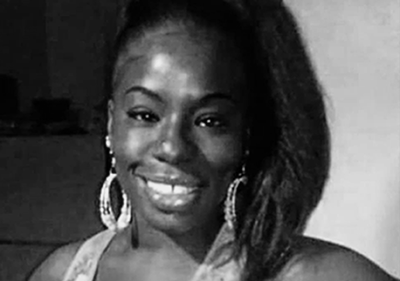
On December 8, 2001, 39-year-old Saudia Banks was found murdered in Chicago, Illinois. Her death by strangulation was not an isolated tragedy but one thread in a dark and terrifying pattern of violence that would haunt the city for nearly two decades. Ms. Banks, a Black woman, is recognized as one of the first victims in a series of killings attributed to a potential serial killer, or killers, sometimes referred to as the Chicago Strangler.
Details about Saudia's life have remained
elusive in the public record, a common and heartbreaking reality for many of the women connected to this string of homicides. What is known is that she was one of six women killed in 2001 whose deaths would later be linked by the Murder Accountability Project, a nonprofit organization that analyzes homicide data. Unlike many of the other victims who were left in alleys, abandoned buildings, or garbage cans, Saudia was one of only three women in the 51-victim cluster who was discovered indoors.
The investigation into her murder, like dozens of others, remains unsolved. Over the years, a horrifying picture began to emerge as more women were found under similar circumstances. Between 2001 and 2018, at least 51 women were killed in Chicago by strangulation or asphyxiation. The victims were predominantly Black, and their bodies were often discovered on the city's South and West Sides, in desolate locations like vacant lots and snowdrifts.
In 2018, the Murder Accountability Project used an algorithm to identify this cluster of 51 unsolved cases, suggesting they could be the work of one or more serial offenders. The organization pointed to the similarities in the method of killing, the victim profiles, and the disposal of the bodies as evidence of a pattern that demanded a specialized investigation. The victims ranged in age from 18 to 58, their lives cut short by a predator who exploited the vulnerabilities of marginalized communities.
Despite pressure from activists and the compelling data presented, the Chicago Police Department has not officially confirmed that a single serial killer is responsible for the deaths. While they have agreed to review the 51 cases, officials have stated there is no definitive forensic evidence, such as DNA, linking all the murders to one individual. This has left the families of the victims, including the loved ones of Saudia Banks, in a painful state of limbo, without answers or a sense of justice.
The series of killings has cast a long shadow over the city, sparking fear and frustration, particularly within the Black community. Advocates and family members have criticized the initial lack of media attention and law enforcement resources dedicated to solving the murders of these women, many of whom lived on the fringes of society. They continue to fight to ensure that the victims are not forgotten, that they are seen as more than just names on a list.
The case of Saudia Banks remains open and unsolved. Her death marks an early chapter in a long and devastating story of violence that has left a deep scar on the city of Chicago. As long as her killer, and the perpetrators responsible for the deaths of the other 50 women, remain free, a sense of justice remains elusive for their families and the community.