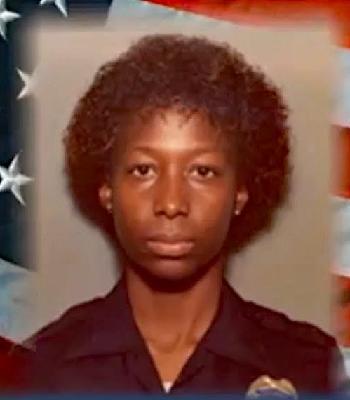
On the evening of May 2, 1983, Regina Harrison, a 20-year-old female college student, left her parents' home in Hollywood, Florida, for her customary bicycle ride through the North Beach neighborhood. A kind and deeply religious young woman, she was studying at Palm Beach Atlantic College. Her brother later described her as a "really sweet kid" who likely would have chosen a career helping others. When she did not return home that night, her friends and family began a frantic search.
The next day, their worst fears were realized when they discovered her nude body in a wooded area of West Lake Park. An autopsy would later reveal she had been raped and strangled to death.
The initial investigation into Regina's murder yielded few leads. Witnesses reported seeing her riding on a popular beach path accompanied by a skinny, long-haired man on a black bicycle. For five months, the case went cold. The break investigators were waiting for seemed to arrive when a Fort Lauderdale detective, John Curcio, saw a television program about the killing. He recognized the description of the suspect and the black bike as matching Ronald Henry Stewart, a serial rapist his unit had recently arrested. A witness from the beach picked Stewart out of a photo lineup, and he was charged with Regina Harrison's murder.
While Stewart confessed to a series of rapes in Broward County and Mississippi, he always maintained his innocence in Regina's death. Despite inconsistencies, including fingerprints from the scene that did not match his, Stewart faced the possibility of the death penalty. Fearing this outcome, he pleaded no contest to second-degree murder in 1985 and was sentenced to 50 years in prison, to be served concurrently with sentences for his other crimes. For decades, the case was considered closed, and Stewart remained, in the eyes of the public and Regina's family, her killer. He died of cancer in prison in 2008, never having disputed the murder conviction.
The truth remained buried for more than 30 years, only coming to light through the actions of another man, a serial killer on death row in Arkansas named Jack Harold Jones Jr. Before his execution, Jones gave his sister a letter he had written years earlier, with instructions to open it one year after his death. Jones was executed by lethal injection on April 24, 2017, for the brutal 1995 rape and murder of Mary Phillips in Bald Knob, Arkansas. He had also been convicted of the 1991 murder of Lorraine "Lori" Barrett in Fort Lauderdale.
When his sister opened the letter in 2018, she found a detailed confession to the murder of Regina Harrison, containing information only the true killer could have known. The letter was forwarded to authorities, prompting a new investigation. In February 2019, the Broward County Sheriff's Office crime lab confirmed through DNA testing that Jack Harold Jones Jr., not Ronald Stewart, had raped and murdered Regina Harrison. Jones had left South Florida shortly after killing Regina, only to return later and claim another victim before moving to Arkansas.
In March 2019, the Broward County State Attorney's Office and the Hollywood Police Department issued a joint statement expressing their regret for the wrongful conviction. They formally moved to have Ronald Stewart's murder conviction vacated, correcting the public record. Regina's brother, Richard Harrison, expressed the family's shock at the stunning revelation, learning that the man they had believed for decades was responsible for their loss was, in fact, innocent of her murder. The posthumous confession of a serial killer finally brought the truth of Regina Harrison's tragic death to light, closing a painful chapter of unanswered questions and mistaken justice.