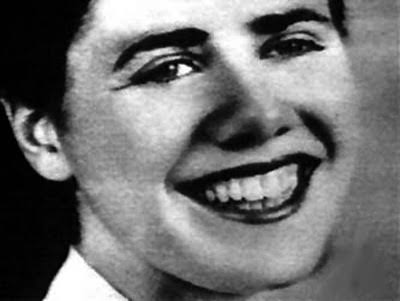
In the summer of 1958, Ruth Mercado, a 24-year-old woman, was full of ambition. A veteran of the Women's Air Force, she had moved from New York to Los Angeles with dreams of building a career as a model and entertainer. To find work, she placed advertisements in local newspapers, hoping for her big break. One of those ads was answered by a man who would not launch her career, but instead, brutally end her life.
The man who called himself a magazine photographer was Harvey Murray Glatman,
a serial killer later known as "The Glamour Girl Slayer" and "The Lonely Hearts Killer." In July 1958, using one of his many aliases like "Frank," he contacted Ruth, who sometimes used the name Angela Rojas, about a supposed modeling job. He first visited her at her apartment on West Pico Boulevard, but she was feeling unwell and postponed the photoshoot. He returned later, and under the guise of a professional opportunity, gained entry into her home and her trust.
Once inside, Glatman's predatory nature was revealed. He pulled out a gun, then bound and gagged Ruth. For hours, he subjected her to a horrifying ordeal of sexual assault and humiliation, all while taking photographs to serve as grotesque trophies of his crimes. He then forced her into his car and drove her out into the vast, desolate landscape of the Southern California desert in San Diego County. There, on July 24, 1958, after another day of torment and taking more pictures of her in bondage, he strangled her to death with a rope. He left her body covered with brush and debris and drove back to Los Angeles, discarding most of her belongings along the highway.
Days later, Ruth's landlord grew concerned after not seeing her for four days. On July 27, he entered her apartment to a distressing scene: her small dog and two parakeets were near death from lack of food and water. He immediately reported her missing to the Los Angeles Police Department. The investigation into her disappearance initially had few leads, joining the unsolved cases of two other young women, Judith Dull and Shirley Ann Bridgeford, who had vanished under similar circumstances.
The break in the case came on October 27, 1958, when Glatman was caught in the act of kidnapping another potential victim, Lorraine Vigil, on the side of the Santa Ana Freeway. A passing highway patrolman saw the struggle and arrested him. In custody, the meek-looking television repairman confessed to the murders of all three women. He led investigators to the remote desert locations where he had left the bodies of Ruth Mercado and Shirley Bridgeford. A search of his apartment uncovered a toolbox containing his camera, rolls of film, and personal items belonging to his victims, including Ruth's wallet and some of her clothing. The developed photographs provided chilling, irrefutable evidence of the women's final terrifying hours.
Harvey Murray Glatman was charged with the murders of Ruth Mercado and Shirley Ann Bridgeford. He pleaded guilty to two counts of first-degree murder and waived his right to a jury trial. During the trial, the 22 photographs he took of his victims were presented as evidence, painting a horrifying picture of his sadism. On December 17, 1958, a San Diego judge sentenced him to death. Glatman himself seemed to accept his fate, telling the court, "I think my actions justify that. I knew this is the way it would be."
He expressed no remorse and asked that no appeals be filed on his behalf. Despite an automatic appeal required by California law for death penalty cases, the process moved swiftly. Harvey Murray Glatman was executed in the gas chamber at San Quentin State Prison on September 18, 1959. The case of the Glamour Girl Slayer was officially closed, but the loss of the vibrant young women he murdered, including a hopeful model from New York named Ruth Mercado, remains a tragic chapter in California's history.