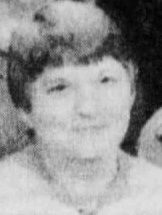
The quiet residential neighborhood of West Norwood, Ohio, became the scene of a disturbing homicide in February 1987 when Verlene “Vi” Leon, a 52-year-old woman who worked as a bookkeeper, was found murdered inside her apartment. Her body was discovered during the early morning hours of Thursday, February 26, 1987, at 4308 Carter Avenue. Leon was lying on the couch near the entrance to her first-floor apartment when Norwood police entered the residence.
Investigators believed she had been violently attacked and apparently bludgeoned to death. Norwood Police Captain Tom Williams reported that she appeared to have died from head injuries. The circumstances surrounding her death immediately raised troubling questions about who had entered her apartment and what had happened during her final hours.
One of the most important witnesses in the initial investigation was Jewel Jay Helton, a 60-year-old retired man who lived in an apartment directly across the hallway from Leon. Helton told reporters that he had noticed her apartment door standing slightly open throughout much of Wednesday, February 25. He also recalled that her television had been playing during that time. Although the open door caught his attention, he explained that Leon sometimes left her door ajar, making the situation seem less unusual than it otherwise might have appeared. It was not until the early morning hours of Thursday that he became increasingly concerned.
At approximately 4:20 a.m., Helton awoke to take medication and heard a strange roaring noise coming from the hallway. When he looked toward Leon's apartment, he realized that her television was still operating, but it was producing the loud static-like sound that televisions made when a station stopped broadcasting. Her apartment door remained partially open. Helton later explained that he sat on his bed for a time, uncertain about what he should do. Eventually, his concern prompted him to contact the Norwood Police Department. Officers responding to the building discovered Leon's body inside her apartment, transforming what had initially seemed like an unusual disturbance into a homicide investigation.
The condition of the apartment provided investigators with several details requiring closer examination. According to Helton, police told him they had discovered Leon's dungarees near the apartment door. Her purse, however, remained inside the residence. The presence of her belongings raised questions about whether robbery had been a motive, although authorities did not publicly establish why she had been attacked. Investigators also had to determine whether the partially open door indicated that someone had entered or departed without securing it, or whether it simply reflected Leon's established habit of leaving her entrance unlocked or ajar. The precise time of the fatal assault was not established in the newspaper account, leaving uncertainty about how long she may have been lying inside the apartment before officers discovered her.
Helton also described an earlier incident that had occurred approximately one year before the murder. On that occasion, Leon had reportedly fallen asleep with her apartment door open, and someone stole her purse and automobile. Her vehicle was subsequently recovered on Ridge Road. The previous theft demonstrated that her habit of leaving the door open had exposed her to criminal activity before, but no evidence was publicly established connecting that incident to her eventual murder. Whether Leon knew the person who killed her, voluntarily allowed someone inside, or was confronted by an intruder remained unanswered.
At the time of her death, Leon was employed through a temporary-services company and had been working as a bookkeeper at Cincinnati Milacron, a major Cincinnati-area manufacturing business. Her employment represented an ordinary part of the life that was abruptly interrupted by the attack. The apartment building where she lived contained four residential units. Helton occupied the apartment across from hers, another unit was vacant, and an elderly woman resided in an upstairs apartment. The relatively small building gave investigators a limited number of neighboring residents who might have noticed unusual sounds, visitors, or movements around the property. Nevertheless, the available public accounts do not identify an eyewitness who actually observed the fatal assault.
Norwood Police Officer Steve Daniels eventually became the lead investigator in Leon's homicide. As detectives examined the circumstances surrounding her death, the investigation expanded beyond Norwood because of two additional killings in the Greater Cincinnati area. The murder of Valerie Wilton in St. Bernard, Ohio, and the April 13, 1987, discovery of Retha Welch's body in Newport, Kentucky, prompted authorities to investigate whether the three deaths might be connected. The victims had been killed within a relatively short period, and detectives identified certain similarities in the physical evidence and circumstances of the crimes.
During meetings held in mid-April 1987, investigators from Norwood, Newport, St. Bernard, and Cincinnati compared their findings. According to police information later examined in federal court, evidence associated with the three homicides included indications of vaginal and anal penetration. Investigators also documented an unusual similarity between the Leon and Welch crime scenes involving bars of soap left in bathroom sinks. Other details connected the Wilton and Welch investigations, including injuries involving the victims' throats. Detectives considered the possibility of a common perpetrator, but the similarities did not establish that the same person had committed all three murders.
The investigation into these possible connections brought William R. Virgil to the attention of authorities. Virgil was being investigated in connection with Welch's murder, and detectives examined whether he might also have been responsible for the killings in Norwood and St. Bernard. Officers exchanged information, reviewed possible suspects, and compared their investigative findings. However, investigators eventually eliminated Virgil as a suspect in Leon's murder, and he was never charged with killing her.
The theory that the three murders were connected weakened considerably toward the end of April 1987. On April 27, Hiram Hyden died by suicide after leaving a note confessing to the murder of Valerie Wilton. Authorities subsequently closed the Wilton investigation. Detectives ultimately concluded that the three killings had not been committed by the same person, and the coordinated investigation largely ended. While investigators in other jurisdictions pursued their respective cases, the Norwood Police Department continued searching for whoever had killed Leon.
Despite the absence of an arrest, investigators developed another significant lead. Records from the Norwood homicide investigation, later discussed in federal court proceedings, identified Danny Staudt as a primary suspect. His identification was associated with the results of a polygraph examination. The records do not establish that Staudt confessed to the murder, and a polygraph result alone would not prove that he was responsible. Nevertheless, his name remained an important part of the documented investigative history. No publicly established evidence demonstrates that authorities obtained sufficient grounds to prosecute him, and he was not charged in connection with Leon's death.
By June 7, 1988, the investigation remained unresolved. During a discussion documented in police records, Detective Daniels confirmed that Norwood's homicide case was still open, although investigators had identified a suspect. The statement demonstrated that police had not abandoned the investigation but had also not reached the point where an arrest and prosecution could be supported. The difference between developing a suspect and proving criminal responsibility remained a central obstacle.
The case resurfaced in federal litigation decades later because of the wrongful conviction of William Virgil for Retha Welch's murder. Virgil had been convicted in 1988 and sentenced to 70 years in prison. DNA testing eventually undermined the evidence used to convict him, resulting in his release and the dismissal of the criminal case against him. Subsequent civil litigation examined the handling of evidence involving alternative suspects and the earlier investigation into the three potentially connected homicides. Through those proceedings, details about Leon's murder and the investigative leads pursued by Norwood detectives became part of the public judicial record.
An August 9, 2023, decision by the United States Court of Appeals for the Sixth Circuit specifically acknowledged that Leon's investigative file had identified Danny Staudt as a primary suspect based on a lie detector examination. The court also confirmed that no one had ever been charged in her homicide. Although the decision provided additional insight into the original investigation, it did not establish who killed her or produce a criminal resolution of the case.
Leon was eventually laid to rest at Dunn Cemetery in London, Kentucky, leaving behind the unanswered circumstances surrounding her violent death. What began with a partially open apartment door, a television left playing, and a concerned neighbor's early morning telephone call developed into a homicide investigation spanning multiple jurisdictions and decades of subsequent legal examination. Investigators considered several possibilities, pursued suspects, and explored connections to other violent deaths, but none of those efforts resulted in a documented prosecution for her murder.
The unanswered questions remain significant. Authorities have not publicly established who entered Leon's apartment, what motivated the attack, whether she knew her assailant, or exactly when the fatal injuries occurred. The discovery of her clothing near the door, the presence of her purse inside the apartment, and the circumstances surrounding the discovery of her body remain important details in the history of the investigation. Despite the development of a primary suspect and the renewed attention brought by later court proceedings, no arrest, criminal trial, or conviction for Leon's murder has been documented in the available records. Her death remains an unresolved chapter in Norwood's criminal history.The quiet residential neighborhood of West Norwood, Ohio, became the scene of a disturbing homicide in February 1987 when Verlene “Vi” Leon, a 53-year-old woman who worked as a bookkeeper, was found murdered inside her apartment. Her body was discovered during the early morning hours of Thursday, February 26, 1987, at 4308 Carter Avenue. Leon was lying on the couch near the entrance to her first-floor apartment when Norwood police entered the residence. Investigators believed she had been violently attacked and apparently bludgeoned to death. Norwood Police Captain Tom Williams reported that she appeared to have died from head injuries. The circumstances surrounding her death immediately raised troubling questions about who had entered her apartment and what had happened during her final hours.
One of the most important witnesses in the initial investigation was Jewel Jay Helton, a 60-year-old retired man who lived in an apartment directly across the hallway from Leon. Helton told reporters that he had noticed her apartment door standing slightly open throughout much of Wednesday, February 25. He also recalled that her television had been playing during that time. Although the open door caught his attention, he explained that Leon sometimes left her door ajar, making the situation seem less unusual than it otherwise might have appeared. It was not until the early morning hours of Thursday that he became increasingly concerned.
At approximately 4:20 a.m., Helton awoke to take medication and heard a strange roaring noise coming from the hallway. When he looked toward Leon's apartment, he realized that her television was still operating, but it was producing the loud static-like sound that televisions made when a station stopped broadcasting. Her apartment door remained partially open. Helton later explained that he sat on his bed for a time, uncertain about what he should do. Eventually, his concern prompted him to contact the Norwood Police Department. Officers responding to the building discovered Leon's body inside her apartment, transforming what had initially seemed like an unusual disturbance into a homicide investigation.
The condition of the apartment provided investigators with several details requiring closer examination. According to Helton, police told him they had discovered Leon's dungarees near the apartment door. Her purse, however, remained inside the residence. The presence of her belongings raised questions about whether robbery had been a motive, although authorities did not publicly establish why she had been attacked. Investigators also had to determine whether the partially open door indicated that someone had entered or departed without securing it, or whether it simply reflected Leon's established habit of leaving her entrance unlocked or ajar. The precise time of the fatal assault was not established in the newspaper account, leaving uncertainty about how long she may have been lying inside the apartment before officers discovered her.
Helton also described an earlier incident that had occurred approximately one year before the murder. On that occasion, Leon had reportedly fallen asleep with her apartment door open, and someone stole her purse and automobile. Her vehicle was subsequently recovered on Ridge Road. The previous theft demonstrated that her habit of leaving the door open had exposed her to criminal activity before, but no evidence was publicly established connecting that incident to her eventual murder. Whether Leon knew the person who killed her, voluntarily allowed someone inside, or was confronted by an intruder remained unanswered.
At the time of her death, Leon was employed through a temporary-services company and had been working as a bookkeeper at Cincinnati Milacron, a major Cincinnati-area manufacturing business. Her employment represented an ordinary part of the life that was abruptly interrupted by the attack. The apartment building where she lived contained four residential units. Helton occupied the apartment across from hers, another unit was vacant, and an elderly woman resided in an upstairs apartment. The relatively small building gave investigators a limited number of neighboring residents who might have noticed unusual sounds, visitors, or movements around the property. Nevertheless, the available public accounts do not identify an eyewitness who actually observed the fatal assault.
Norwood Police Officer Steve Daniels eventually became the lead investigator in Leon's homicide. As detectives examined the circumstances surrounding her death, the investigation expanded beyond Norwood because of two additional killings in the Greater Cincinnati area. The murder of Valerie Wilton in St. Bernard, Ohio, and the April 13, 1987, discovery of Retha Welch's body in Newport, Kentucky, prompted authorities to investigate whether the three deaths might be connected. The victims had been killed within a relatively short period, and detectives identified certain similarities in the physical evidence and circumstances of the crimes.
During meetings held in mid-April 1987, investigators from Norwood, Newport, St. Bernard, and Cincinnati compared their findings. According to police information later examined in federal court, evidence associated with the three homicides included indications of vaginal and anal penetration. Investigators also documented an unusual similarity between the Leon and Welch crime scenes involving bars of soap left in bathroom sinks. Other details connected the Wilton and Welch investigations, including injuries involving the victims' throats. Detectives considered the possibility of a common perpetrator, but the similarities did not establish that the same person had committed all three murders.
The investigation into these possible connections brought William R. Virgil to the attention of authorities. Virgil was being investigated in connection with Welch's murder, and detectives examined whether he might also have been responsible for the killings in Norwood and St. Bernard. Officers exchanged information, reviewed possible suspects, and compared their investigative findings. However, investigators eventually eliminated Virgil as a suspect in Leon's murder, and he was never charged with killing her.
The theory that the three murders were connected weakened considerably toward the end of April 1987. On April 27, Hiram Hyden died by suicide after leaving a note confessing to the murder of Valerie Wilton. Authorities subsequently closed the Wilton investigation. Detectives ultimately concluded that the three killings had not been committed by the same person, and the coordinated investigation largely ended. While investigators in other jurisdictions pursued their respective cases, the Norwood Police Department continued searching for whoever had killed Leon.
Despite the absence of an arrest, investigators developed another significant lead. Records from the Norwood homicide investigation, later discussed in federal court proceedings, identified Danny Staudt as a primary suspect. His identification was associated with the results of a polygraph examination. The records do not establish that Staudt confessed to the murder, and a polygraph result alone would not prove that he was responsible. Nevertheless, his name remained an important part of the documented investigative history. No publicly established evidence demonstrates that authorities obtained sufficient grounds to prosecute him, and he was not charged in connection with Leon's death.
By June 7, 1988, the investigation remained unresolved. During a discussion documented in police records, Detective Daniels confirmed that Norwood's homicide case was still open, although investigators had identified a suspect. The statement demonstrated that police had not abandoned the investigation but had also not reached the point where an arrest and prosecution could be supported. The difference between developing a suspect and proving criminal responsibility remained a central obstacle.
The case resurfaced in federal litigation decades later because of the wrongful conviction of William Virgil for Retha Welch's murder. Virgil had been convicted in 1988 and sentenced to 70 years in prison. DNA testing eventually undermined the evidence used to convict him, resulting in his release and the dismissal of the criminal case against him. Subsequent civil litigation examined the handling of evidence involving alternative suspects and the earlier investigation into the three potentially connected homicides. Through those proceedings, details about Leon's murder and the investigative leads pursued by Norwood detectives became part of the public judicial record.
An August 9, 2023, decision by the United States Court of Appeals for the Sixth Circuit specifically acknowledged that Leon's investigative file had identified Danny Staudt as a primary suspect based on a lie detector examination. The court also confirmed that no one had ever been charged in her homicide. Although the decision provided additional insight into the original investigation, it did not establish who killed her or produce a criminal resolution of the case.
Leon was eventually laid to rest at Dunn Cemetery in London, Kentucky, leaving behind the unanswered circumstances surrounding her violent death. What began with a partially open apartment door, a television left playing, and a concerned neighbor's early morning telephone call developed into a homicide investigation spanning multiple jurisdictions and decades of subsequent legal examination. Investigators considered several possibilities, pursued suspects, and explored connections to other violent deaths, but none of those efforts resulted in a documented prosecution for her murder.
The unanswered questions remain significant. Authorities have not publicly established who entered Leon's apartment, what motivated the attack, whether she knew her assailant, or exactly when the fatal injuries occurred. The discovery of her clothing near the door, the presence of her purse inside the apartment, and the circumstances surrounding the discovery of her body remain important details in the history of the investigation. Despite the development of a primary suspect and the renewed attention brought by later court proceedings, no arrest, criminal trial, or conviction for Leon's murder has been documented in the available records. Her death remains an unresolved chapter in Norwood's criminal history.