Early on the morning of Wednesday, June 25, 2003, patrol officers from the Los Angeles Police Department’s Newton Division responded to a dead body call at 754 East 12th Street in South Los Angeles. The location was an industrial and commercial alleyway south of downtown, a gritty corridor lined with warehouses and commercial buildings. When officers walked behind the building around 7:55 a.m., they made a horrifying discovery. Discarded on the pavement were multiple heavy plastic trash bags containing severed human body parts.
Homicide detectives who arrived at the scene quickly deduced that the victim had been killed elsewhere before his remains were transported to the alley and dumped in the early morning darkness. The victim was Clinton C. Mejia Jr., a 32-year-old Black man who resided in southwest Los Angeles. However, at the time of the gruesome find, investigators did not even know who he was. The killers had deliberately severed his hands to thwart fingerprint identification, and without dental records or personal belongings, the body was cataloged at the coroner’s office simply as an unidentified John Doe.
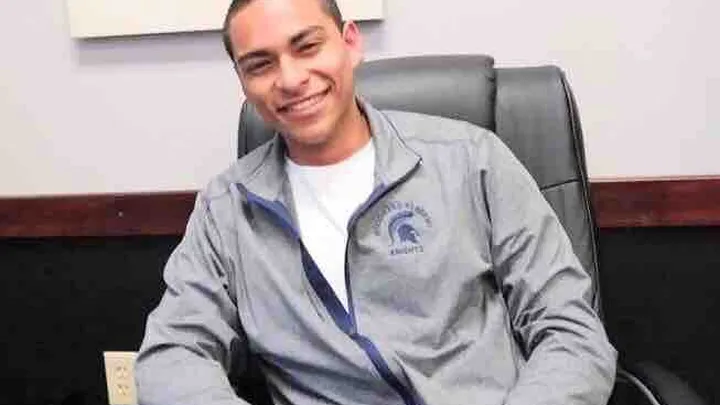
For three weeks, detectives followed every lead they could muster, but the investigation stalled without a name. Facing a total dead end, investigators made the rare and difficult decision to ask the public for help by showing the dead man's face. Detective Richard Arciniega, one of the lead investigators on the case, called a press conference at the Newton Area Station on July 16, 2003. Displaying a tightly cropped photograph of the victim’s face to television cameras was an act of last resort. Arciniega noted that putting such an image on television was heartbreaking for potential loved ones, remarking that no investigator ever wants a mother or family member to learn about the death of their son during a morning news broadcast.
The grim gamble yielded an immediate breakthrough. Just hours after the broadcast aired on local television news stations, friends and family members recognized his features and flooded the homicide desk with phone calls. Relatives came forward to positively identify him as Clinton Mejia. Detective Jesus Linn explained that having an identity finally gave investigators a starting point, opening potential lines of inquiry into Mejia’s daily life, his acquaintances, and where he might have been in the hours before his death.
Detectives suspected that the extreme measure taken to conceal Mejia’s identityâ€"severing his hands and attempting to hide his remainsâ€"was the work of ruthless criminals seeking to delay detection. The brutal method of disposal pointed to a calculated, pre-planned attempt to evade justice. Yet despite establishing his identity, detectives were met with silence on the streets. The specific cause of his death was not released to the public, and investigators were left without physical evidence pointing to the primary crime scene where the murder had taken place.
More than two decades later, the murder of Clinton Mejia remains completely unsolved. No suspects have ever been publicly named, and no arrests have been made in connection with his death. His family continues to endure the painful absence of answers and justice. The Los Angeles Police Department Newton Area Homicide Division maintains an open file on the homicide and urges anyone who may have information about what happened to him to come forward and contact detectives or submit tips anonymously through Crime Stoppers.