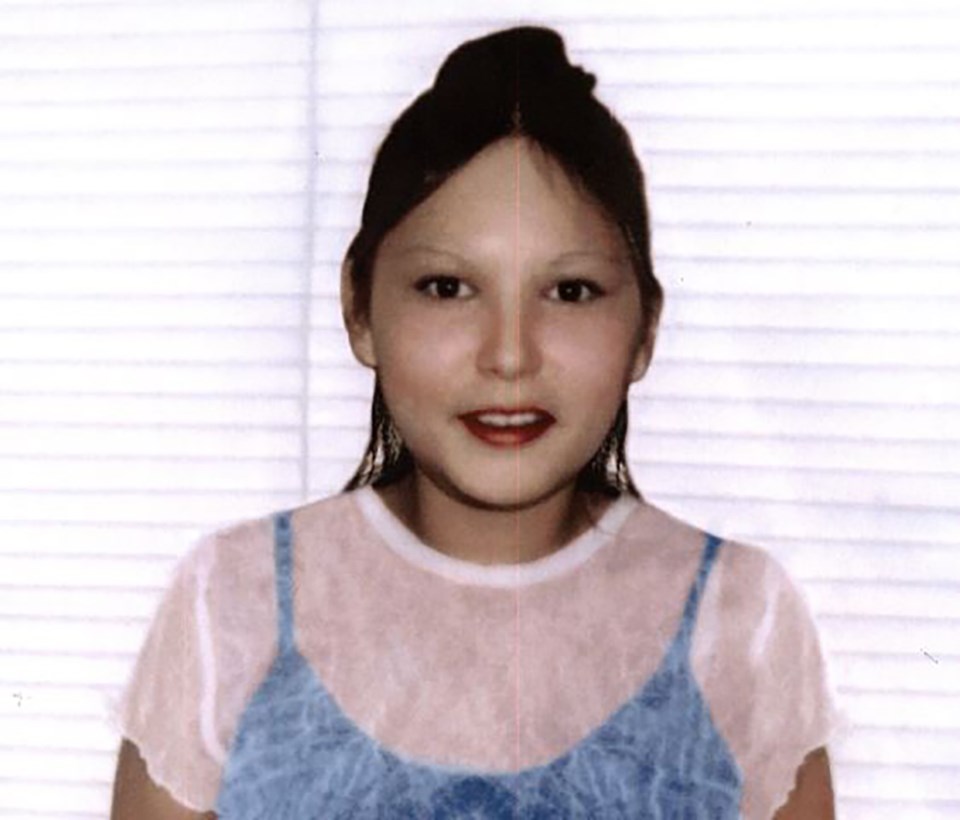
Marie Lynn Lasas was a 19-year-old Indigenous woman and mother of two whose disappearance from Saskatoon, Saskatchewan, became a homicide investigation after her remains were discovered months later. She had roots in a First Nations community and had spent part of her childhood in foster care before living with her grandfather in Saskatoon. Those who knew her described her as caring and protective of others, and she had been working toward completing high school while raising her young
daughters.
On the night of September 24, 2006, Marie was at a friend's residence in the 600 block of Avenue H South. At approximately 10:30 p.m., she left the house and told her friend that she intended to walk to a family member's residence on 28th Street. That was the last confirmed sighting of her. Marie failed to maintain the regular contact her family expected from her, missed calls she normally made to her children, and did not collect a government cheque. Those breaks from her normal routine quickly caused concern among both her relatives and police.
The Saskatoon Police Service issued a public missing-person appeal on October 4, 2006. At the time, investigators described Marie as having auburn hair and brown eyes and said she had been wearing grey jeans, a black jacket and a white headband when she was last seen. Police began trying to reconstruct where she might have gone after leaving her friend's home, while her family waited for information that might explain why she had suddenly vanished.
Months passed without Marie being found. Then, on June 30, 2007, human remains were discovered in the 200 block of 33rd Street West in Saskatoon. Authorities determined that the remains had apparently been at the location for a considerable period of time. The discovery shifted the case from a search for a missing young mother to an investigation into a suspicious death.
On July 19, 2007, police announced that the remains had been positively identified as Marie through dental records. Officials from the University of Saskatchewan College of Dentistry and the Forensic Identification Lab in the university's Department of Archaeology assisted with the identification. Saskatoon police formally stated that her death was being considered a homicide, and detectives with the Major Crime Section continued pursuing information developed during the earlier missing-person investigation. Publicly released information has not established the specific circumstances or method by which Marie was killed.
The passage of time did not produce an arrest. About a year after her remains were found, Marie's grandfather publicly appealed for anyone with information to come forward, while police acknowledged that relatively few useful leads had emerged. Her family continued seeking answers about what happened after she disappeared and who was responsible for her death.
The case remained unsolved for years. On September 25, 2023, the Saskatoon Police Service again appealed to the public, describing Marie's killing as a historical homicide and confirming that the investigation remained open. Police specifically stated that no suspects had been arrested and expressed their belief that members of the public might still possess information capable of advancing the investigation.
No publicly identified suspect has been charged with Marie's homicide, and there has consequently been no trial or conviction in connection with her death. Her last confirmed movements on September 24, 2006, the circumstances that led to her remains being left on 33rd Street West, and the identity of the person or people responsible remain unresolved. The Saskatoon Police Service continues to treat her death as an open homicide investigation.