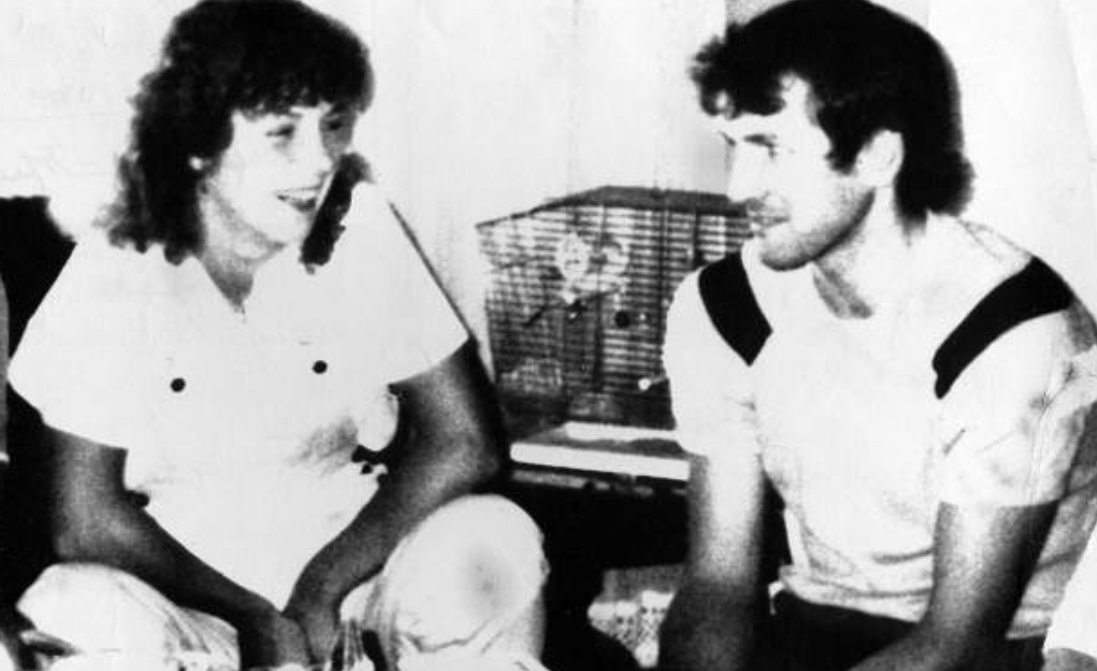
David Jon Malloy, a 44-year-old White/Caucasian male, was working as a taxi driver for Vancouver Yellow Cab when an ordinary Sunday shift turned into a fatal robbery. Malloy had moved to the Vancouver area from California in 1976, later attending the University of British Columbia and earning a master’s degree in library science. He began driving a cab part-time in the late 1980s and also worked for Black Top and MacLure’s Taxi.
People who knew him described him as intelligent, articulate, mild-mannered and deeply interested in subjects including philosophy, writing, poetry, music, politics and social issues.
On March 17, 1996, Malloy began his Yellow Cab shift at about 2:00 p.m. and spent much of the day working in Vancouver’s West End. At approximately 9:30 that evening, he picked up a passenger near the intersection of Seymour and Robson streets. The passenger was described as a Black male in his late twenties who directed Malloy across Burrard Inlet into North Vancouver, eventually taking him to the area behind the 700 block of West 20th Street.
Once they reached the North Vancouver location, the passenger attacked Malloy inside or around the taxi. Malloy was repeatedly stabbed, suffering more than 20 wounds to his back, neck, head and left hand. One account reported that 17 of the stab wounds were to his back. The assailant robbed Malloy, taking his wallet, forced or dragged him from the taxi and then fled in the stolen Yellow Cab, leaving Malloy badly wounded in the alley.
At approximately 9:39 p.m., North Vancouver RCMP received a 911 call reporting an injured person lying in the alley behind the 700 block of West 20th Street. Witnesses had heard a vehicle in the alley and what sounded like a crash shortly before seeing a yellow taxi leave the area. When police and emergency personnel reached Malloy, he was still conscious but appeared to be in shock. Despite the severity of his injuries, he was able to tell a witness and investigators that he was a Yellow Cab driver, that he had been robbed and stabbed, and that his attacker had stolen both his wallet and taxi. He also provided police with a description of the person who had attacked him.
Police immediately distributed information about the stolen taxi and suspect to law-enforcement agencies and cab companies throughout the area. Only about ten minutes after the 911 call, at approximately 9:49 p.m., another Yellow Cab driver spotted Malloy’s stolen taxi traveling eastbound in the 100 block of West Hastings Street in downtown Vancouver. The driver followed it for several blocks before losing it in traffic, but managed to get a useful look at the person behind the wheel. The suspect was described as dark-skinned, with a goatee, glasses and a white baseball cap. That witness later assisted investigators in producing a composite drawing.
The stolen Yellow Cab was located at approximately 10:03 p.m. near Dunlevy Avenue and Cordova Street in Vancouver after another taxi employee found it abandoned. Investigators subjected the vehicle to forensic examination, hoping the assailant had left fingerprints or some other identifying evidence behind. According to accounts of the investigation, however, the examination failed to produce evidence that allowed police to identify the killer.
Malloy was rushed to Lions Gate Hospital in critical condition. Although the attack occurred on March 17, online sources consistently report that he remained alive for another two days. He died at Lions Gate Hospital on March 19, 1996, with one contemporary account reporting that a stroke resulting from the stabbing injuries contributed to his death. The March 17 date was therefore the date of the attack, rather than the date of his death.
The killing shocked Vancouver’s taxi community. On March 22, hundreds of taxi drivers participated in Malloy’s funeral procession, with roughly 300 cabs traveling through downtown Vancouver and across the Lions Gate Bridge to the funeral home in West Vancouver. His death also renewed public discussion about the dangers faced by taxi drivers and whether protective shields and improved vehicle-tracking technology should become standard equipment. A week after the funeral, the West Coast Taxi Association reportedly offered a $10,000 reward for information leading to the conviction of Malloy’s killer.
Investigators had a physical description and composite drawing of the suspect, as well as Malloy’s own account of what had happened, but no publicly identified suspect was ultimately arrested. Available records do not show anyone being charged, brought to trial or convicted in connection with the stabbing and robbery. The assailant who entered Malloy’s cab near Robson and Seymour streets, attacked him in North Vancouver and abandoned the stolen taxi downtown has never been publicly identified, and the homicide remains unsolved.