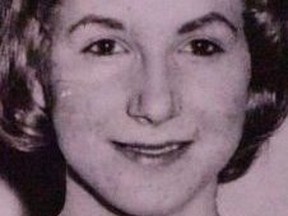
Mariam Debra Peters, a 16-year-old girl, left her Willowdale home in North York on the evening of Friday, November 7, 1975, intending to visit her ailing grandfather at Mount Sinai Hospital in downtown Toronto. She was a Grade 11 student at A. Y. Jackson Secondary School. Her boyfriend had originally planned to accompany her but became ill, so Peters made the trip alone.
Her mother dropped her at Finch subway station at about 6:30 p.m., and Peters traveled south on the Toronto subway.
Later that evening, Peters was at St. Patrick subway station, beneath the University Avenue and Dundas Street West area. At approximately 8:20 p.m., two nurses traveling to work discovered her near the top of an escalator, critically injured. She had been stabbed 16 times. Police and emergency personnel responded, and Peters was rushed to Toronto General Hospital. Although the attack occurred on November 7, she did not die that night. She remained critically injured for four days before dying on November 11, 1975. Accounts of the case reported that a brain hemorrhage resulting from her injuries contributed to her death.
The attack occurred during a period when portions of Toronto's University subway line could be extremely quiet, particularly during off-peak hours. St. Patrick station contained passageways and areas that were difficult to observe, and the system did not yet have the extensive security-camera coverage familiar to later generations of TTC riders. Investigators were left with a violent attack inside a transit station but no evidence strong enough to identify and prosecute Peters's killer. Her death was classified as Toronto's Homicide #44 of 1975 and remains listed by Toronto Police among the city's cold cases.
The investigation did produce a significant lead. Police identified a person of interest who was also linked to the stabbing of another woman roughly ten minutes after the attack on Peters. That second incident occurred in a parking lot near Simcoe and Wellington streets in downtown Toronto. The woman survived and was able to get away from her attacker. Despite the apparent connection between the two incidents, investigators were unable to obtain sufficient direct evidence to make an arrest or proceed with a prosecution in either case.
Descriptions circulated of the man being sought in connection with the investigation. Published accounts described him as a white man believed to have been in his twenties or thirties, of medium build, with dark hair and dark eyes, and as soft-spoken. Some reports placed him at approximately 5 feet 8 inches to 5 feet 10 inches tall and described him as clean-shaven. No publicly identified suspect, however, was ever charged with Peters's killing.
Police offered a $10,000 reward for information that could identify the killer, but the investigation never resulted in an arrest, criminal charge, trial, or conviction. Decades later, Toronto Police continued to classify the homicide as unsolved and to seek information from anyone who might know what happened inside St. Patrick station that night.
The killing had consequences far beyond the criminal investigation. Peters's death focused public attention on security conditions in Toronto's subway system. Uniformed police patrols were introduced on the subway in the aftermath, and her family pressed the TTC to improve surveillance in isolated areas of stations. A joint review by transit officials and police considered closed-circuit television, although the proposal was not implemented at the time because of cost and staffing concerns. Other safety measures, including passenger alarms and improved visibility inside subway cars, followed.
Areas of St. Patrick station that could provide secluded hiding places were eventually closed off, and similar changes were made at Queen's Park and later Museum station. The alterations became a lasting physical reminder of the crime and of the concerns it raised about passenger safety. Peters's funeral drew approximately 1,500 mourners, including relatives, classmates, friends and members of the public. More than half a century after she was stabbed, no one has been arrested or prosecuted for her murder, leaving the killing of Mariam Peters one of Toronto's enduring unsolved homicides.