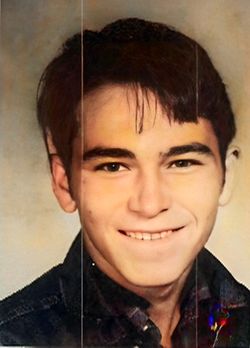
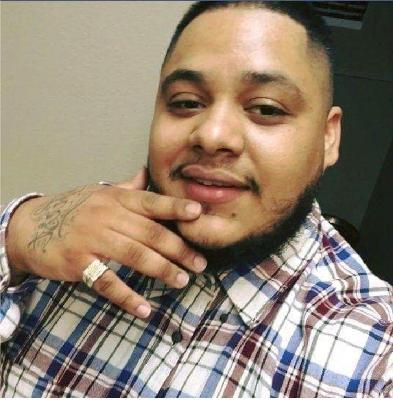
Michael Francke was a 42-year-old White male who was serving as director of the Oregon Department of Corrections when he was killed outside his office in Salem on the evening of January 17, 1989. Francke worked in the Dome Building on the grounds of the Oregon State Hospital, where the Department of Corrections maintained its administrative offices.
He had been appointed corrections director in 1987 and was overseeing Oregon’s prison system during a period of severe overcrowding, expansion, and controversy.
Francke attended a meeting at the Dome Building on January 17 and remained at work afterward, meeting with colleagues in his office. He was last seen alive at approximately 6:45 to 6:50 p.m. He had indicated that he intended to telephone his wife before leaving for home. Not long afterward, people in the area noticed that the door of Francke’s vehicle was standing open in the parking area. Between approximately 7:05 and 7:20 p.m., employees saw the open car door but apparently did not realize that Francke had been attacked nearby.
Investigators later concluded that Francke had been confronted near his vehicle and stabbed. Evidence showed that his attacker made three knife thrusts. One cut his overcoat, another passed through his left upper arm and slightly penetrated his chest, and the final thrust entered the left side of his chest and pierced his heart. Francke also suffered injuries around his face and hands. Mortally wounded, he apparently made his way back toward the Dome Building’s north portico and attempted to get inside, breaking a pane of glass in a locked door, but he was unable to enter. He collapsed on the porch, where an Oregon State Hospital security guard discovered his body shortly after midnight on January 18. The medical examiner determined that Francke died from the stab wound to his heart and massive blood loss. The murder weapon was never recovered.
The investigation eventually focused on Frank Edward Gable, a Salem-area man involved in the local drug scene. Police began looking closely at Gable after receiving statements from people who claimed that he had admitted killing Francke. Prosecutors developed a theory that Gable was attempting to burglarize Francke’s automobile when Francke surprised him. According to the State’s case, the confrontation escalated and Gable stabbed Francke before fleeing. There was no physical evidence tying Gable to the murder, however, and the prosecution’s case depended on testimony from people who claimed either to have witnessed the attack or to have heard Gable confess.
A Marion County grand jury indicted Gable in April 1990. At his 1991 trial, Cappie “Shorty” Harden testified that he saw Gable inside Francke’s vehicle and witnessed Francke approach and demand to know what he was doing in the car. Harden said Gable got out and stabbed Francke. Several other witnesses testified that Gable made incriminating statements to them. Gable denied killing Francke and maintained his innocence. After a lengthy trial, the jury convicted him on six counts of aggravated murder and one count of murder. In July 1991, he was sentenced to life imprisonment without the possibility of parole. His conviction was upheld on direct appeal.
Serious questions about the conviction developed over the following decades. Nearly all of the witnesses who had directly implicated Gable eventually recanted or substantially changed their accounts. Several said investigators had pressured or manipulated them, while some acknowledged that hostility toward Gable because he was believed to have worked as a police informant influenced accusations against him. Federal courts later concluded that the prosecution’s case had been built on witness testimony that was deeply compromised by coercive investigative techniques.
Of particular importance was another man, John Crouse. Long before Gable went to trial, Crouse had repeatedly made statements indicating that he himself killed Francke. In one detailed version, Crouse said he was attempting to break into a vehicle near the Dome Building when Francke confronted him. Crouse claimed that he struck Francke and stabbed him before running away. Although Crouse gave inconsistent accounts and sometimes recanted, some of the details he provided matched facts about the crime that had not been made public. He described multiple knife wounds, injuries to Francke’s arms and hands, a blow to the left side of Francke’s face and the general circumstances of the confrontation. He also said he was wearing a tan-colored jacket, consistent with a witness’s description of a man seen leaving the area.
Gable’s attorneys attempted to introduce evidence of Crouse’s confessions during the 1991 trial, but the trial judge excluded it from the jury. Crouse himself denied responsibility when questioned in court. Decades later, the exclusion of his earlier statements became one of the central issues in Gable’s federal habeas corpus case. The U.S. Court of Appeals for the Ninth Circuit concluded that Crouse’s confessions were unusually significant because they contained information consistent with both the crime scene and the only objective eyewitness evidence. The appellate court also determined that the jury that convicted Gable had never heard evidence that could have substantially changed its evaluation of the case.
In April 2019, a federal judge granted Gable’s habeas corpus petition and vacated his conviction, finding that his constitutional right to due process had been violated when evidence concerning Crouse was excluded. The judge also found that the later recantations and evidence concerning investigative misconduct presented a substantial claim of actual innocence. Gable was released from prison in June 2019 after serving nearly three decades, although litigation over the conviction continued.
In September 2022, the Ninth Circuit affirmed the decision overturning Gable’s conviction. The court described the record developed after trial as dramatically different from what the original jury had heard, emphasizing both the compromised testimony against Gable and Crouse’s repeated confessions. The State sought review by the U.S. Supreme Court, but the Supreme Court declined to hear the case in April 2023.
In May 2023, the federal court permanently ended the prosecution of Gable. The original Marion County indictment was dismissed with prejudice, Gable’s conviction was ordered vacated and expunged, and Oregon authorities were barred from arresting, indicting, or trying him again for Francke’s murder. The State had informed the court that it did not intend to retry him. As a result, the only conviction ever obtained for Michael Francke’s killing no longer exists.
John Crouse was never prosecuted for Francke’s murder despite his repeated confessions, and he later died. Other individuals and broader theories have been discussed publicly over the years, including suspicions that Francke’s position as corrections director and concerns about misconduct or corruption within Oregon’s prison system could have played a role in his death. Those theories have never produced a criminal conviction establishing such a motive. Federal appellate judges acknowledged that numerous alternative theories have surrounded the case for decades and that even members of Francke’s family came to believe Gable was not responsible, while disagreement remained over who actually killed Francke and why.
More than three decades after Michael Francke was stabbed outside the Dome Building, his murder therefore remains without a valid conviction. Frank Gable, once imprisoned for life for the killing, has had his conviction vacated and expunged and cannot be prosecuted again for the crime. John Crouse’s detailed and repeated confessions remain a major part of the unresolved history of the investigation, but no court ever determined that he was Francke’s killer. The case continues to leave the central question unanswered: who killed Michael Francke on January 17, 1989, and what circumstances ultimately led to his death?