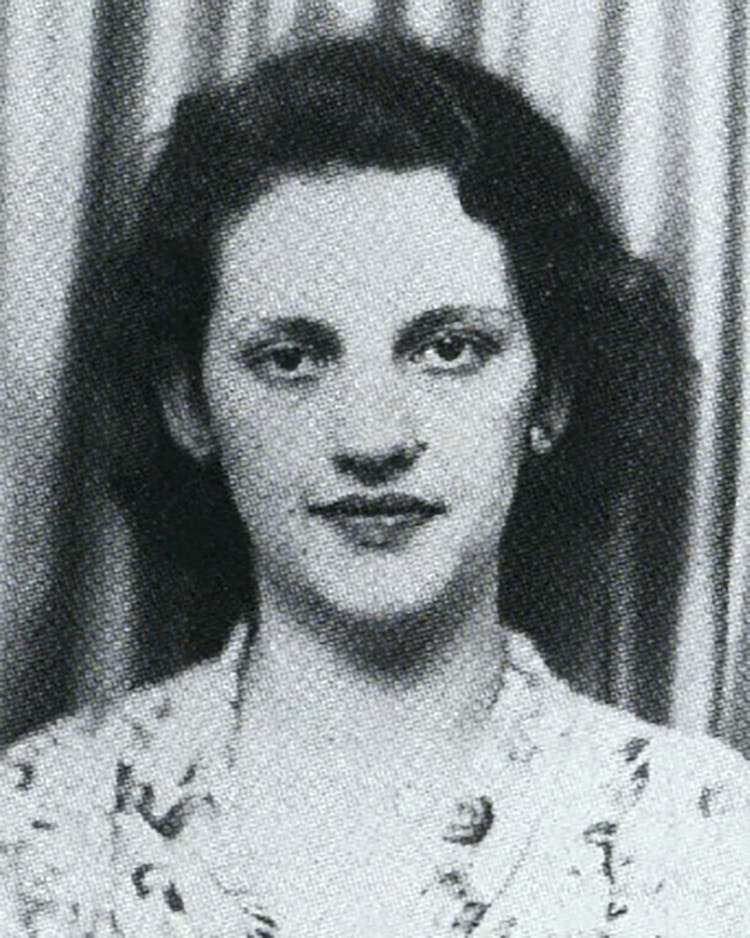
Hazel Brown, also known as 'Schatzie,' was a 21-year-old barmaid who worked at Joe Ball's bar in Elmendorf, Texas. She was born on December 17, 1916, in Lee County, Texas, and was the daughter of Hamilton Harrison Brown and Emma Armenta Dismukes. Hazel married her first cousin, Floyd Waymon Harrison, in July 1931, but they later divorced. She had one child, Vernon Delmer Harrison. Hazel moved to Elmendorf by 1937 and began working at the Sociable Inn, owned by Joseph D.
'Joe' Ball.
Hazel Brown's life took a tragic turn when she fell for a regular customer at the bar and wanted to stop working for Joe Ball. In 1938, she was murdered by Joe Ball, who was also known as 'The Alligator Man' and 'The Butcher of Elmendorf.' Ball, a suspected serial killer, disposed of Hazel's body with the help of his handyman, Clifford Wheeler. Wheeler later led investigators to the site where Hazel's remains were found, along with the remains of another barmaid, Minnie Gotthardt.
Joe Ball's criminal activities came to light when women in the area, including barmaids, were reported missing. When two Bexar County deputy sheriffs went to question him in 1938, Ball pulled a handgun from his cash register and killed himself with a bullet through the heart. Clifford Wheeler, who admitted to helping Ball dispose of the bodies, was imprisoned for two years as an accessory to murder. The alligators that Ball kept at his bar were donated to the San Antonio Zoo.
Hazel Brown's murder was part of a series of crimes committed by Joe Ball, who was believed to have been responsible for the deaths of multiple women. Ball's wife, Dolores 'Buddy' Goodwin, claimed in a 1957 interview that no actual women were thrown into the alligator pit, and that there were only ever two murders. Ball's nephew, Richard 'Bucky' Ball Jr., attributed the crimes to violent trauma experienced during his World War I service. The story of Joe Ball and his crimes has been investigated and written about, including in a 2002 article by Michael Hall for Texas Monthly. The film 'Eaten Alive' by Tobe Hooper was inspired by Ball's story.