Frederick LaGois, a 60-year-old man, came into Good Samaritan Hospital in West Islip, New York, expecting treatment and time to heal, not a final reckoning. On October 9, 1987, while hospitalized and awaiting surgery for a prostate condition, he died inside the place that was supposed to keep him safe. In the moment it happened, it could have looked like one more sudden medical crisis in a ward full of fragile hearts and failing lungs—an emergency that flared up without warning and then went
dark.
Only later did the outline of a darker story sharpen, sparked by what another patient said he saw: a bearded nurse approaching an intravenous line, an unexplained injection, and then the terrifying slide into breathlessness. That survivor’s alarm—and the chain of tests and scrutiny that followed—pulled back the curtain on a pattern of “code blue” emergencies that seemed to arrive with uncanny regularity, often with the same nurse rushing in to lead resuscitations. Investigators began to look at whether the crises were being manufactured, not merely answered, and whether the hospital’s sudden collapses were less “natural” than they first appeared.
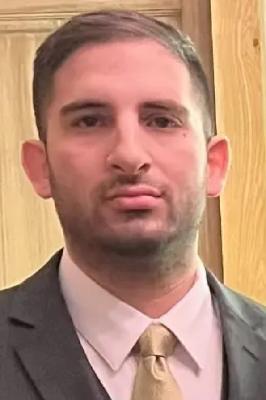
As the investigation focused, Suffolk County’s chief medical examiner, Charles Hirsch, pointed to an explanation that didn’t belong in an ordinary hospital death: the presence of Pavulon, a powerful muscle-paralyzing drug, detected through autopsy and toxicological testing. Hirsch’s conclusion was that LaGois died from Pavulon poisoning and that the death was a homicide—language that recast the hospital room as a crime scene. Prosecutors moved toward the person at the center of the widening suspicion: Richard Angelo, a nurse from Lindenhurst. Authorities pursued the case through indictments that included murder and assault charges connected to LaGois’s death, framing the act not as a tragic mistake, but as a deliberate, unauthorized poisoning carried out under the cover of routine care.
The case didn’t stop with one death. Officials exhumed dozens of bodies from patients who had died during the period Angelo worked at the hospital, searching for traces of the same drug and building a broader picture of how far the alleged scheme might have reached. Investigators also linked the unfolding medical mystery to physical evidence and to the testimony of the patient who survived, describing how an injection was followed by the feeling of suffocating from the inside out. In court, the story of heroics was turned on its head: what looked like devotion at the bedside was argued to be a calculated attempt to create emergencies so the perpetrator could be seen “saving” the very people he had endangered.
At trial, Angelo did not base his defense on denying the injections; instead, he tried to reframe what they meant—arguing through expert testimony that mental illness kept him from recognizing the deadly risk his conduct created. The prosecution countered with its own experts and the grim logic of repeated, unauthorized drug-induced respiratory distress in vulnerable patients. The case ultimately ended in convictions spanning multiple patients, with the courts later summarizing that he was found guilty of serious homicide and assault offenses arising from those hospital injections. In the aftermath, he received a long prison sentence measured in decades, and the legal record treated the episode as something far beyond negligence: a breach of trust carried out in a place where patients had little ability to protect themselves, and where LaGois—who went in expecting surgery—became one of the dead.