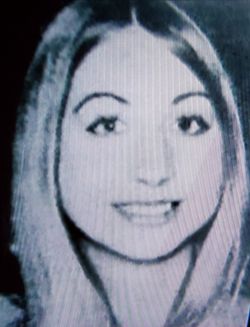
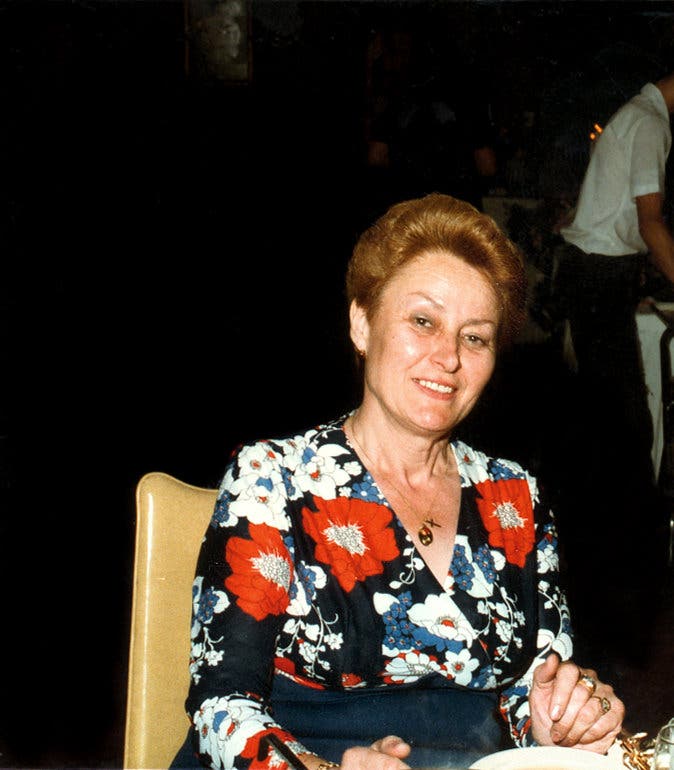
Josefina Cepeda, 24, a Latina woman, slipped out of view in New York City’s restless late-summer of 1981, when the streets of northern Manhattan and the Bronx pulsed with heat, noise, and the everyday hurry of people trying to get home. Not long after, her body was found near the 207th Street crossing over the Harlem River, a bridge that links West 207th Street in Manhattan to Fordham Road in the Bronx, a seam between boroughs where traffic never really stops. She had been strangled, the force tightened into something as cold and efficient as a tool, and she was left there as if the river wind might erase what had been done.
In the retellings that surfaced years later, investigators and reporters described a predator who didn’t come at victims with a mask or a gun, but with an offer designed to sound ordinary: cheap designer jeans, the kind of bargain that could make a stranger feel briefly familiar. The pitch was a hook—small talk, proximity, a promise of something harmless—until it wasn’t. Accounts tied Cepeda’s death to a string of violent attacks in 1981, a pattern of strangulation and binding that suggested someone who liked control as much as killing, someone who turned everyday objects into instruments of silence.
For a time, the case lived in that grim space where answers are scarce and fear is loud. Then, in February 1982, police arrested Jesus Aguilera and held him in a Bronx stationhouse. Over roughly twenty hours of custodial interrogation across February 16–17, with bilingual assistance and prosecutors present at different points, he gave written and videotaped statements in which he admitted to two separate killings—one in the Bronx, and another in Manhattan. Court records later made clear that the Manhattan homicide became its own prosecution in New York County, separate from the Bronx case, and that his statements were central to what followed.
Aguilera was indicted for murder and related charges in both counties, and the legal road stretched on longer than the public might expect from a confession. In the Bronx case, he was tried and convicted first. The Manhattan case came later: an initial trial in the mid-1980s ended in a deadlock and mistrial, and a retrial the following year ended with a guilty verdict. Years afterward, an appellate fight over whether he should have been granted a separate suppression hearing in Manhattan produced a ruling that sent the case back for further proceedings on the admissibility of his statements, underscoring just how heavily the prosecution had leaned on what he’d said in custody.
The broader narrative of Aguilera’s crimes—drawn from later reporting and official summaries—painted Cepeda’s killing as one chapter in a short, brutal spree after his arrival in the United States during the Mariel-era migration. Reports described him as already serving two consecutive life sentences for the earlier convictions, with Cepeda identified as the Manhattan victim among those crimes. Decades later, a separate 1981 murder was linked to him through preserved biological evidence and modern testing; he pleaded guilty to that killing and received an additional sentence, a reminder that even when one murder is “solved,” the shadows around a serial pattern can stretch for generations.
As for suspects and arrests in Cepeda’s case, the trail that the public record most consistently returns to ends with Aguilera: arrested in 1982, interrogated, charged, and ultimately convicted for the Manhattan homicide that sources identify as Cepeda’s death. Later media accounts also floated his name as a possible suspect in at least one additional killing beyond the three for which he was definitively punished, but the reporting around that point is cautious and uneven, reflecting the difference between suspicion and what can be proven in court. What remains steady across the sources is the image of a life taken and left at the edge of a bridge—an ending made abrupt, and a name that kept resurfacing whenever the city tried to count the cost of that year’s violence.