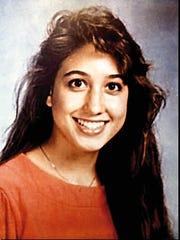
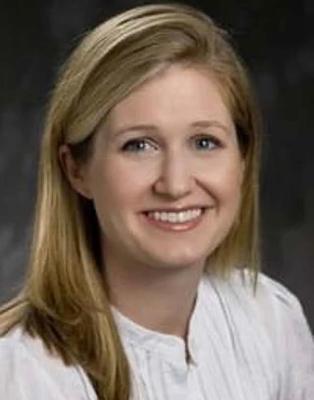
White / Caucasian female Eliza Hope Thomas, age 17, finished her Friday shift at an I Can’t Believe It’s Yogurt! shop in North Austin on December 6, 1991, alongside her friend and co-worker Jennifer Harbison, also 17. Jennifer’s 15-year-old sister, Sarah, and their 13-year-old friend, Amy Ayers, were inside as closing time neared. Just before midnight, smoke drew first responders to the small storefront.
Firefighters discovered a horrifying scene: the four teenagers had been bound with their own clothing, shot in the head, and the shop had been set ablaze, a blaze that destroyed evidence and deepened the mystery. The attack transformed a bright corner of a neighborhood into the epicenter of one of Austin’s most haunting crimes.
In the months and years that followed, investigators wrestled with a case made fragile by fire damage and a lack of surveillance or payment records that might have fixed a timeline or captured faces. The prevailing narrative suggested a robbery that spiraled into violence, but motive never hardened into certainty. Tips surged, suspects were questioned, and the city carried the memory of four schoolgirls—Eliza Thomas, age 17; Jennifer Harbison, age 17; Sarah Harbison, age 15; and Amy Ayers, age 13—whose ordinary evening had been stolen.
Years later, a sweeping turn came with the arrests of four local men. Two—Robert Springsteen Jr. and Michael Scott—were convicted in the early 2000s after controversial interrogations and confessions that would not withstand time or science. When DNA testing excluded the men from critical evidence, courts overturned the convictions in 2009 and the prosecutions collapsed, returning the case to the cold files and leaving families in the purgatory between grief and justice.
The story did not end there. Renewed attention and advances in forensic methods pushed investigators back into the evidence. In late 2025, Austin police announced that ballistics and genetic analysis converged on a new name: Robert Eugene Brashers, a drifter with a violent past who died by suicide in 1999 after a police standoff. A. 380-caliber shell casing from the Austin yogurt shop matched an unsolved 1998 Kentucky case, and Y-STR DNA under one victim’s fingernails aligned with Brashers’ profile through investigative genetic genealogy. Authorities have yet to establish a motive or a clear link tying him to Austin that winter, but they say the totality of the evidence points to him as the likely killer, a long-elusive answer for the teenagers’ families and a coda to a case that shadowed the city for nearly thirty-four years.