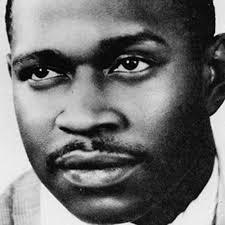
Christopher Livingston, a 26-year-old Black man from Detroit, Michigan, died on May 23, 2014. His name carries the weight of a life that was real and immediate—someone who moved through ordinary days, who had people who recognized his voice, who knew his habits and his hopes, who could be missed in a way that never quite fits into words.
Detroit is a city of neighborhoods stitched together by memory—porch lights, corner stores, familiar routes, and the quiet understanding that community is often built in small, repeated moments. In a place like that, a loss doesn’t stay contained. It ripples outward, touching family first, then friends, then coworkers and classmates, and even those who only knew him in passing. A death becomes more than a date on a calendar; it becomes the sudden absence of a presence.
What remains in the simplest facts is the sharpest truth: he was here, and then he wasn’t. The day he died stands like a hard marker, dividing time into before and after. For the people who loved him, May 23 would not have felt like an abstract point in history. It would have been the kind of day that rearranges a family, the kind of day that changes the sound of a home, the kind of day that makes every phone call and every knock at the door feel heavier.
There are details that would normally fill out the story—how the day began, what he planned, who saw him last, where he was headed, what was said and left unsaid. But when those details aren’t available, the mind still reaches for them, because the heart hates an unfinished sentence. Grief often has to live with unanswered questions, and that can be its own kind of pain: not only mourning what happened, but also mourning the clarity that never arrives.
In the absence of a fuller public account, it can be tempting to turn someone into a mystery, to let speculation crowd out remembrance. But Christopher Livingston deserves more than guesswork. He deserves the dignity of being spoken of as a person first—someone whose life mattered, whose death mattered, and whose name should not be reduced to rumor or empty shorthand.
There is also a quieter truth that sits beneath every loss: the unfinished possibilities. A life is not just what was already known, but what could have been next—future conversations, future plans, future ordinary days that would have added up into something bigger. When a person dies, those futures vanish too, and the people left behind have to learn how to live in a world where those futures exist only as imagination and ache.
Detroit has always carried stories of endurance, of people who keep going even when they’re tired, even when the weight is unfair. Families hold each other up. Friends show up. Communities try, in the ways they know how, to make meaning out of what feels senseless. Sometimes that meaning looks like gathering close, sometimes it looks like speaking a name aloud so it doesn’t fade, and sometimes it looks like a private promise to remember the real person behind the headlines that never came.
If you say Christopher Livingston’s name, you are already doing something important. You are refusing to let him become invisible. You are insisting that his life counts enough to be held in words, even when those words can’t explain everything. And in that insistence—quiet, steady, human—there is a kind of love that continues, even after May 23, 2014.