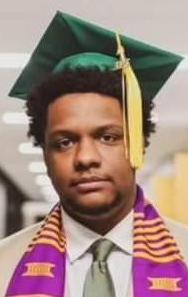
Raynard Dunlap was 25 years old when his life was taken, a young man from Detroit whose story ended in a place that should have been empty and forgotten. He was a Black man, found on the weekend of April 30, 2016, inside a vacant party store in the 12300 block of Grover Street, as if the city itself had tucked him away where no one would hear what happened.
Investigators said he had been killed by a gunshot, and what made the discovery even more haunting was the belief that his body had
been there for some time before anyone found him. In the silence of an abandoned building, time stretched on without answers, without a call for help reaching him, without the simple mercy of someone realizing quickly that he was missing and in danger. The scene wasn’t just a crime scene; it was a heartbreaking reminder of how easily someone can be swallowed by overlooked corners of a neighborhood and how long a family can live in the space between “last seen” and “found.”
For detectives, the hardest part began after the tape went up and the first photographs were taken: trying to build a path backward. They needed to know where Raynard had been, who he’d talked to, and what brought him to that vacant storefront. They appealed to the public for help, asking anyone who had seen him or knew something about his final movements to come forward. It was the kind of plea that carries both urgency and sorrow—because every hour that passes can dull memories, scatter witnesses, and bury small details that might have mattered.
In the information released publicly about the case, there were no announced arrests, no named suspect, and no clear motive offered to explain why Raynard’s life was cut short. That absence is its own kind of cruelty. It leaves a family and a community holding onto questions that don’t settle: Who was with him last? Was it sudden, or did something build to that moment? Did someone nearby hear something and dismiss it as just another noise in the night? When there’s no suspect in view, grief doesn’t get the anchor of accountability—it just drifts, heavy and unresolved.
And yet the facts that are known are stark enough: a young man, gone; an abandoned place turned into the last place he was seen; a death that investigators believe occurred earlier than the moment he was discovered. Raynard Dunlap’s name remains tied to that vacant party store on Grover Street, but he was more than the place where he was found. He was someone who moved through Detroit with a life that mattered to people who knew him, people who waited for him, people who were left to pick up the pieces when he didn’t come home.
Cases like this linger not only because of the missing suspect, but because they underline how precious ordinary moments are—how a routine day can become a last day without warning. Raynard’s story, as it has been publicly told, ends with an unanswered appeal for information and a violent act that stole his future. What remains is the hope that someone, somewhere, still holds the detail that could bring clarity—one remembered conversation, one sighting, one truth finally spoken aloud—so that his death is not only remembered, but understood, and so that the people who loved him can someday receive something closer to peace.