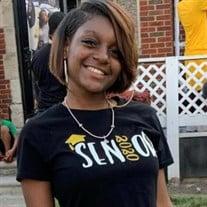
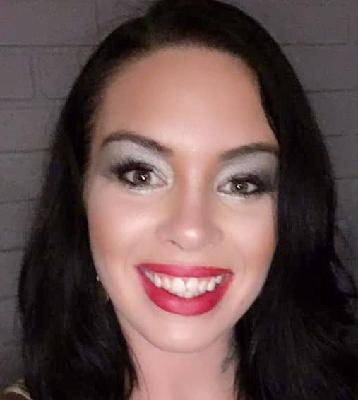
Ranita Cannon, 26, a Black woman from Detroit, was driving late on Sunday night, September 25, 2016, when the ordinary rhythm of a short trip turned into a nightmare on the city’s northwest side. She had left home around 10:45 p.m., telling family she was heading to a friend’s house, and a male passenger was with her as she steered a burgundy 2008 Pontiac G5 onto the eastbound stretch of the James Couzens Freeway near West 8 Mile Road.
Near 11:40 p.m., as the car moved along the freeway by the Lodge service drive area near 8 Mile and Greenfield, a dark-colored SUV pulled alongside. From inside that SUV, someone opened fire, sending multiple rounds into the Pontiac at close range. Both occupants were hit several times. In the chaos after the shots tore through the vehicle, the Pontiac struck another car, and when everything finally came to a stop, she was pronounced dead at the scene from her injuries while the passenger survived and was taken for medical treatment.
In the hours that followed, the shock rippled outward from the freeway to her family, who said they received a call just before midnight telling them she was gone. The details were scarce, the circumstances hard to grasp: an attack on a moving car, the shooter hidden behind the windows of an SUV, and a passenger whose identity was not publicly clear in the earliest reporting. What remained unmistakable was how quickly the night had swallowed her life and left everyone who loved her staring at the same questions—who did this, and why?
Investigators described the suspect vehicle only in broad strokes as a dark-colored SUV. The shooter, and any other occupants who may have been inside that SUV, were not publicly identified, and no clear motive was released in the public updates. The case was treated as an ongoing homicide investigation, and authorities urged anyone who saw the SUV, noticed anything unusual on that stretch of freeway, or heard someone talk about the shooting afterward to come forward.
As her loved ones tried to stitch together what they could, pieces of her life emerged alongside the violence that ended it. She had played basketball at Redford High School, attended Wayne County Community College, and was working as a machine operator at Panther Automotive while pursuing plans to become a pharmacist. Family accounts described a future with momentum—she had been married for four years and had a young son—now reduced to memories and an absence that settled into daily life.
In the years after the shooting, public reports continued to describe the killer as still at large, with no arrests announced in connection with her death. Crime Stoppers of Michigan offered a reward for information leading to an arrest, including a push that added additional money if a tip came in by a specific deadline during one renewed appeal. The central facts remained grimly consistent: a drive on the James Couzens Freeway, an SUV that pulled up close, a burst of gunfire, and a case that—despite time, pleas, and rewards—was still waiting for the person or people behind that SUV to be identified and held accountable.