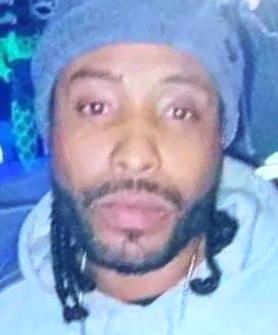
Rico Dowtrin was a 38-year-old Black man from Detroit, Michigan. Even with only those few facts, a whole life is implied behind them: a person who moved through familiar streets, carried routines and responsibilities, and left impressions on people who knew his voice, his laugh, his habits, his way of showing up.
When a death is reduced to a name, an age, and a hometown, it can feel like the world is rushing past the most important part. The most important part is that Rico was not a headline or a statistic to the people who loved him. He was someone’s constant. Someone’s memory in motion. Someone whose absence would change the shape of ordinary days—how a phone sits silent, how a chair stays empty, how certain places in Detroit suddenly become too heavy to pass without thinking of him.
A loss like this doesn’t arrive neatly. It spreads out. It touches the small corners first: the last message that can’t be answered, the habit of reaching for the phone, the reflex to share a joke or a piece of news, the moments when you forget for half a heartbeat and then remember all at once. Grief often comes in waves—some gentle, some punishing—and it can make time feel strange, as if the past keeps replaying while the future refuses to look the same.
There are also questions that come with a death, questions that don’t stop simply because the world keeps turning. The mind tries to build a story it can live with, tries to make sense of the senseless, tries to find a clean edge to something that feels jagged. And when details are scarce, the imagination fills the gaps in ways that can be cruel—each possibility its own kind of ache.
But even when the circumstances are unknown or unspoken, there is a truth that remains steady: Rico mattered. He mattered in the quiet ways people matter, not always loudly, not always in ways that leave a record behind. He mattered in presence, in familiarity, in the way a life becomes woven into other lives. That is what death steals—not only breath, but continuity.
Detroit is a city of neighborhoods and histories, of resilience and pride, of people who learn how to carry hardship without letting it hollow them out. In a place like that, a loss is never isolated. It echoes through friends, through relatives, through coworkers and acquaintances, through the people who might not have known him well but still felt the weight of another life cut short. It becomes a shared sorrow, and sometimes a shared determination: that a person’s story should not end in silence.
Remembering Rico means refusing to let his name be the only thing that remains. It means holding space for the fact that he lived before he died. It means acknowledging the tenderness of a life that touched others, and the heartbreak of what was taken. It means honoring the grief of those left behind—people who must now learn to carry love in the form of absence, and who deserve answers, compassion, and peace that has not yet arrived.
And if there is one thing that can be said with certainty, even from the smallest set of facts, it is this: a life ending is never small. Rico Dowtrin’s death is not just an event—it is a rupture. It is a missing voice in the city he came from, and a wound in the hearts of those who knew what it meant to have him here.