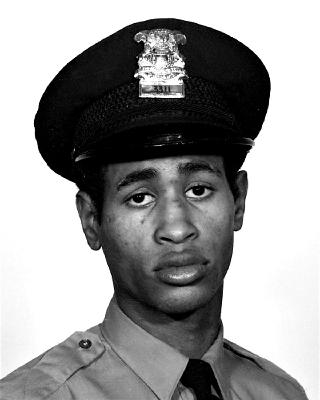
Larry Jr. Ware, a 50-year-old Black man, was killed in Detroit, Michigan. His death appears in the public record as a homicide, but the story of what happened to him is difficult to piece together from widely accessible reporting: there is no clear, commonly circulated account that lays out where he was headed, who he was with, or what set the violence in motion.
What can be said with certainty is mostly defined by what’s missing. In the places people usually turn for answers—mainstream news archives, public-facing police updates, and broadly indexed case summaries—there isn’t a detailed narrative that consistently identifies witnesses, a motive, or a sequence of events leading up to the killing. The absence of those details leaves a hollow outline: a man is gone, and the public version of the case doesn’t explain why.
Because those basics aren’t publicly laid out, information about suspects is equally scarce. No suspect is consistently named in accessible online coverage, and there is no readily available public accounting that connects Ware’s killing to a specific arrest, formal charges, a trial, or a conviction. In practice, that means the questions that matter most—who did it, what they wanted, and how they got away—remain unanswered for anyone trying to understand the case from the outside.
For the people who knew him, that kind of silence can feel like a second injury—grief paired with uncertainty, and an ending that never fully takes shape. Until investigators publicly identify a person responsible or prosecutors bring a case into open court, Larry Jr. Ware’s death remains a largely unspoken Detroit homicide: a life ended, a family altered, and a story that, in the public eye, is still waiting to be told.