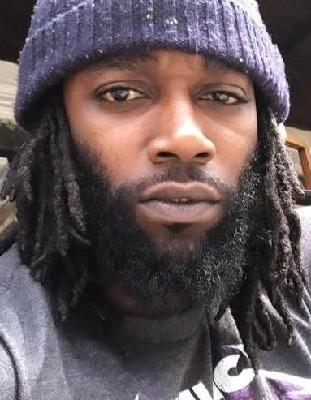
In Baltimore, Aldrick Hamilton—a 32-year-old Black man—appears in the kind of public record that can feel both brutally direct and painfully incomplete: an entry that classifies his death as a murder under the Baltimore Police Department’s jurisdiction. In the information provided, he is described not with the fullness of a life, but with the minimal facts that remain when a person is reduced to a case file: a name attached to a homicide listing, a loss that is real even when the details
are scarce.
What makes the story even harder to hold is that the information provided points to conflicting public listings about when and where the violence happened. One record-style description ties his death to a murder listing connected to Baltimore and the Baltimore Police Department, yet offers no narrative of what led to his final moments—no explanation of where he was going, who he was with, what he might have said, or whether he even had time to realize the danger closing in. Another reference included in the provided material points to an incident time and location described as 9:02 PM on 04/22/2025 at the 1300 block of N Fulton Ave. Separately, the information provided also includes a different date and a different block—September 28, 2011, with a location stated as the 1900 block of East 31st Street—another set of coordinates that places him in a different moment entirely. Taken together, these pieces don’t form one clean timeline; they form a troubling blur, the kind that can happen when a person’s name is carried across databases and public lists that don’t always match, and the human truth underneath is left for others to try to reconstruct.
Still, the emotional weight doesn’t depend on perfect certainty in the paperwork. Somewhere inside those addresses and dates is the reality of a man who did not make it home, a life interrupted in a city that has had to count too many losses. The language surrounding his name—“murder,” “homicide,” “jurisdiction”—is cold by design, built for classification rather than comfort. It doesn’t tell you what his laugh sounded like, what he feared, what he hoped for next. It doesn’t show the circle of people left behind trying to make sense of the sudden absence, or the way grief can turn ordinary places into landmarks of pain.
And there is another silence in the information provided: the silence where answers should be. No suspect is named. No arrest is listed. No charges appear. There is no defendant to point to, no courtroom progression, no trial milestones, no conviction that suggests accountability has been reached. The story, as reflected in what’s been provided, ends in the open air of uncertainty—an official classification of murder, paired with a lack of publicly visible resolution.
That is what makes the record feel like a question that never stops being asked. Aldrick Hamilton is there, in print, in the stripped-down format of public listings—proof that he existed and that what happened to him mattered enough to be recorded. But the same records that hold his name also hold back the why, the how, and the who. In that gap, what remains is the heartbreak of a life reduced to fragments: a homicide classification, conflicting time-and-place references, and the enduring absence of a clear ending.