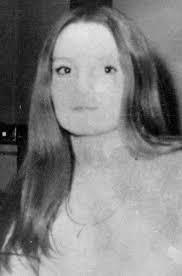
Mary Jenkins was a 16-year-old White girl from New Jersey whose life came to a tragic end during a vacation in the Florida Keys in May 1973. Mary and her older sister, Marguerite “Maggie” Jenkins, had traveled to Key West in April 1973, hoping to enjoy an adventure far from home. What began as a vacation filled with possibilities would become a devastating tragedy that haunted their family for more than five decades. On May 2, 1973, the sisters were last seen alive while hitchhiking on Stock Island, just outside Key West. Neither would ever return home.
On May 3, 1973, a local resident made a horrifying discovery in a wooded area near U.S. Highway 1 at Mile Marker 99.5 in Key Largo, approximately 100 miles north of where the sisters had last been seen. Their bodies were found roughly 100 yards from the highway, concealed among trees and vegetation. Both had been severely beaten and suffered gunshot wounds.
Investigators examining the scene determined that the sisters had endured a violent attack before their bodies were abandoned in the remote area. A detective who later discussed the investigation described the extensive injuries and explained that gunshot wounds were the primary cause of death for both victims. Their clothing had been disturbed, and their bodies were partially covered with sticks, leaves, and dirt.
The Monroe County Sheriff's Office launched a homicide investigation, attempting to reconstruct the sisters' final movements and determine who might have encountered them after they were seen hitchhiking. Detectives faced significant challenges because the victims were visitors to the area, their last known location was far from where their bodies were discovered, and there were few immediately identifiable leads. Despite investigative efforts, authorities were unable to establish the identity of a suspect. No arrests were made, and the murders eventually became one of the Florida Keys' longstanding unsolved double homicides.
The killings devastated the Jenkins family. Their surviving older sister, Sarah Jenkins Barlow, later recalled traveling to Florida with their mother and her future husband after learning of the murders. The family remained in the area for approximately a month, attempting to uncover information about what had happened. Sarah described how they conducted their own investigation, hoping to find answers that had eluded detectives. Their efforts did not produce a resolution, and the family returned home carrying questions that would remain unanswered for decades.
For Sarah, the memories of her sisters remained far more important than the brutality of their deaths. She remembered Maggie as adventurous, strong-willed, and passionate about horses, while Mary was a sweet and innocent girl with an excellent singing voice. Both had been interested in traveling and experiencing life beyond their familiar surroundings. Sarah continued honoring their memories throughout her own travels, sometimes imagining that her sisters were accompanying her to the places they never had the opportunity to visit. Although the investigation remained unresolved, their family refused to allow their identities to be defined solely by the violence that took their lives.
A significant breakthrough occurred in 2018 when forensic specialists with the Florida Department of Law Enforcement revisited biological evidence preserved from the original investigation. Analysts developed additional genetic markers from a partial male DNA profile obtained from a bloodstain discovered on the underwear of one of the victims. The enhanced profile was uploaded into the Combined DNA Index System, commonly known as CODIS, and searched against national law enforcement DNA records. Unfortunately, investigators received no match, leaving the identity of the person who contributed the biological evidence unknown.
The investigation took another major step forward in 2023 when the Florida Department of Law Enforcement's Forensic Investigative Genetic Genealogy Program accepted the case for advanced analysis. Investigators partnered with Othram, a forensic laboratory based in The Woodlands, Texas, to develop a more comprehensive DNA profile using specialized sequencing technology. The resulting genetic information was submitted to databases used for investigative genetic genealogy. Unlike traditional criminal DNA searches, this technique allowed investigators to identify potential relatives of the unknown individual and construct family trees that could reveal his identity.
Through extensive genealogical research and the examination of family connections, investigators developed a promising lead pointing toward David Allen Snyder, a former Key West resident. Additional investigation established that Snyder had lived at several locations in Key West between 1972 and 1974, placing him in the general area during the period when Mary and Maggie disappeared. Although this geographic connection was important, investigators needed further biological evidence to establish whether Snyder was the individual whose DNA had been recovered from the original crime evidence.
In 2026, investigators obtained a DNA sample from one of Snyder's relatives and submitted it to the Florida Department of Law Enforcement crime laboratory for comparison. The results confirmed Snyder's identification as the suspect associated with the preserved DNA evidence. After more than 53 years, detectives finally had a name connected to the murders. On September 2, 2026, the Florida Department of Law Enforcement and the Monroe County Sheriff's Office publicly announced that David Allen Snyder had been identified as the suspect responsible for killing the Jenkins sisters.
However, the breakthrough came too late for criminal prosecution. Investigators determined that Snyder had died of natural causes on October 28, 2008, in Mountain View, Idaho, at the age of 57. His death occurred nearly 18 years before authorities publicly identified him as the suspect. As a result, Snyder was never arrested, formally charged, prosecuted, or convicted in connection with the murders. Authorities have not publicly established the precise circumstances of the sisters' encounter with Snyder, the motive for the killings, or the full sequence of events between their disappearance on Stock Island and the discovery of their bodies in Key Largo.
The announcement brought an emotional conclusion to decades of uncertainty for the Jenkins family. Sarah Jenkins Barlow described being shocked when investigators contacted her with the news, explaining that she had never truly expected the case to be solved. Three investigators eventually visited her home to explain their findings and provide documentation of the breakthrough. Although she expressed appreciation for the investigators' persistence and compassion, the discovery was bittersweet because Snyder had died without ever facing justice in a courtroom.
The identification of Snyder represented an extraordinary achievement for investigators who had continued examining the case long after the original crime scene evidence was collected. Scientific advances transformed a partial DNA profile that initially produced no matches into a critical investigative lead. The collaboration among the Monroe County Sheriff's Office, the Florida Department of Law Enforcement, and forensic genealogy specialists ultimately provided answers that had seemed unattainable for generations.
Mary Jenkins' death on or around May 2, 1973, and the murder of her sister remain a heartbreaking reminder of how quickly an ordinary journey can turn into tragedy. Although authorities now consider David Allen Snyder responsible for the killings, his death prevented the case from proceeding through the criminal justice system. No trial or conviction resulted from the investigation. For Mary's surviving family, the identification of a suspect provided a measure of closure, but it could never restore the years of life, experiences, and family memories that were taken from the sisters. More than half a century after their deaths, Mary and Maggie are remembered not simply as victims of a brutal double homicide, but as two young sisters whose lives, personalities, dreams, and close family bonds deserved far more than the ending they received.