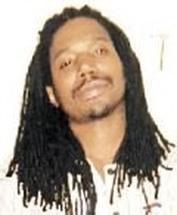
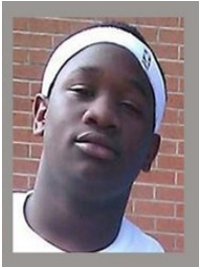
Daniel Rabelo was 30 when his life ended, a man from New Orleans, Louisiana, taken from the everyday world he moved through—the streets he knew, the people who recognized his face, the routines that quietly stitch a life together until they’re suddenly torn apart. He was a Hispanic/Latino male, and behind the handful of identifying facts is the reality that someone who was once present in a thousand ordinary moments is now remembered through the sharp, unbearable finality of his death.
In a city that carries both celebration and sorrow in equal measure, the loss of a single person can feel like a bell that rings unheard outside a small circle. But to the people who loved Daniel, nothing about it would have been small. It would have been the kind of news that changes the air in a room, that turns time into “before” and “after.” A death doesn’t just erase the future; it reaches backward, reshaping memories, turning casual conversations into treasured artifacts and unfinished plans into questions that never stop asking themselves.
New Orleans is a place where life is often lived out loud, yet grief can be intensely private. After Daniel died, there would have been the immediate shock—phones ringing, messages sent, the awful scramble to understand what happened, and the dawning realization that understanding might not come easily. There would have been someone who kept expecting him to walk through a door, someone who stared at a screen waiting for a reply that would never arrive, someone who held a piece of clothing or a photograph and felt the weight of how quickly a living presence can become a memory.
When a person dies violently, it leaves a particular kind of emptiness behind: not just the pain of absence, but the cruelty of uncertainty. It’s the ache of knowing that there is a reason—someone’s decision, someone’s act, a moment that can’t be taken back—and yet that reason can remain out of reach. In the aftermath, people replay the last time they saw him, the last words said, the last small signs of an ordinary day. They wonder what he felt, whether he knew he was in danger, whether he had time to be afraid, whether there was any chance for help. Those thoughts can become a loop that grief forces on the mind, not because the mind wants to suffer, but because love refuses to accept an ending without answers.
Based only on what has been provided, there is no information here about any arrests, suspects, charges, trials, or convictions connected to Daniel Rabelo’s death. That absence can be its own wound. It means there is no public resolution to hold onto, no sense that the story has reached a point where justice has been spoken aloud in a courtroom or a name has been firmly attached to responsibility. It means the people who cared for him may have carried their grief while also carrying a second burden: the feeling that something essential remains unsettled, that the world kept moving even though theirs had split open.
And still, even with so little known beyond the bare facts, Daniel’s story matters because he mattered. His name deserves to be said with gentleness, not reduced to a statistic or a line in a record. He was more than the circumstances of his death—more than the silence that follows when details aren’t available. He was a person rooted in New Orleans, part of a community, a life that touched other lives. The most heartbreaking truth is that when someone dies, love doesn’t end with them. It stays behind, looking for a place to go, searching for meaning, and refusing—day after day—to forget.