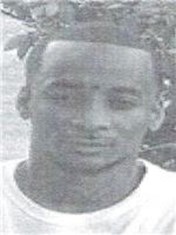
Ronald Celestine Jr., a 35-year-old Black man, died on September 5, 2014, in New Orleans, Louisiana. The public record of his passing is brief in the way such notices often are—date, place, name—yet the weight of it sits heavy because a life is never truly captured by a single line. In the wake of his death, the memory that remains is not a statistic or a headline, but the shape of the person his family and friends knew: the familiar voice, the presence that once filled rooms, the ordinary
moments that now feel precious because they cannot be repeated.
He is identified as the son of Ronald Celestine Sr. and Ida Jarvis Celestine, and as the husband of Cheakita Schaffer Celestine. Those relationships—son, husband—say something important even without pages of detail, because they speak to bonds that mattered, to people who loved him long before the world ever had a reason to notice his name. When someone is taken, the loss ripples outward, touching parents who remember a child becoming an adult, a spouse who remembers small routines and private jokes, and loved ones who now carry a grief that arrives in waves: sometimes quiet, sometimes sudden, sometimes overwhelming.
Online memorial pages preserve a simple truth: he existed, he was here, and he is missed. They function like candles in a window—small points of light that say a person should not be reduced to the moment they died. They hold space for remembrance, for the ache of what should have been, for the instinct to keep speaking his name so it does not drift away with time. Even when details are scarce, that act of remembering becomes a kind of resistance against disappearance, a refusal to let a life be erased.
Some public crime listings associated with New Orleans police information categorize Ronald Celestine Jr.’s death as a homicide and present it as unsolved. The online sources available do not provide publicly reported suspect names, and they do not describe arrests, charges, trials, or convictions connected to his killing. That absence is its own kind of pain—because when answers are missing, families are often left holding questions that never stop forming. Uncertainty stretches grief into something longer, something that lingers, something that can reopen with every passing year, every milestone that comes and goes without resolution.
What remains, then, is the human center of the story: a man whose death left a void, and loved ones who have had to keep living with that void. The public information gives only the outline, but the heart of the loss is easy to understand. A name in a notice can represent a thousand memories—birthdays, conversations, laughter, shared meals, plans made and postponed, and hopes that once felt ordinary because there was still time. After September 5, 2014, time changed shape for those who cared about him, dividing life into before and after.
Ronald Celestine Jr.’s story, as it appears in the limited information available, is marked by a death that is recognized but not fully explained in public view, and by a remembrance that persists. There is a solemn finality in the date of his passing, but there is also a quiet insistence that he be remembered as more than that date: as a son and a husband, as a person who mattered deeply, and as someone whose absence is still felt by the people who loved him.