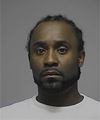
Do you know who murdered Ronald R Reed?
Ronald R. Reed was a 33-year-old Black man from Louisville, Kentucky, whose life was cut short on October 16, 2007. That day, violence found him at 956 South Hancock Street, a modest single-family home in the Smoketown/Jackson area just southeast of downtown. Police records later reduced that loss to a few stark lines: his name, his age, the word “homicide,” and the address where everything ended. Behind those clipped details was a real person whose final moments unfolded on an otherwise ordinary October day, in a neighborhood of narrow streets and close-set houses where people came and went, never expecting that one of their blocks would become a permanent crime scene in the city’s history.
The house on South Hancock had only been built a few years earlier, part of the slow churn of rebuilding and reinvestment in older sections of Louisville. On that date in 2007, however, it became the focal point of a murder investigation. Responding officers and investigators were called to the scene to confront the aftermath of a killing that offered them far more questions than answers. From that point on, the address and Ronald’s name would be joined in official summaries, filed alongside photographs and brief case notes, a quiet reminder that what had happened there was not an accident or natural death, but an intentional act that took a life.
In the years that followed, the Louisville Metro Police Department kept Ronald’s case in public view by placing his photograph in its “2007 Open Homicides” gallery, alongside other victims from that year. The description attached to his picture is spare but telling: it confirms that he was murdered, gives his age and the date, and repeats the South Hancock address. The gallery is part of a broader effort by the department to highlight unsolved murders, and the very fact that Ronald’s image remains there indicates that detectives have never been able to close the case. His killing is officially treated as an unsolved homicide, still open on the books and still awaiting the piece of information that might finally explain what happened and why.
No publicly available police summaries or official listings show that anyone has ever been arrested, charged, or publicly named as a suspect in connection with Ronald Reed’s death. There are no court records or news accounts tying a defendant to his case, no reports of a trial or conviction that might have brought some measure of legal closure. Instead, his name appears in the same context year after year: as one of Louisville’s unsolved murders, a case for which investigators continue to seek help from the community. His story, as it can be traced through those records, is the story of a life ended by another person’s deliberate act and of an investigation that, despite being kept alive on police rolls and public pages, has yet to reveal who was responsible for taking him away.