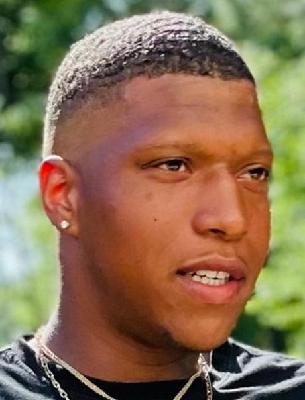
Devin Allen Dempsey, a 19-year-old white male from the Cordova and Orangeburg area of South Carolina, was remembered by his family as a son who loved lifting weights, staying close to his relatives, and doting on the people and pets around him. He was born in Orangeburg on August 27, 2001, and grew up rooted in the small communities of Orangeburg County, the child of Anthony Dempsey Sr. and Donna Klinicki Dempsey.
After graduating from Bamberg-Ehrhardt High School in 2020, he was on the fragile threshold between adolescence and adulthood, still closely tied to his parents’ home in Cordova and to his extended family, who knew him as a quiet presence with a strong physical streak and a soft spot for his “fur baby,” a dog named Molly.
On the night of January 30, 2021, that ordinary life collided with sudden violence in Cordova. Public records place a shooting there that day in which Devin was critically wounded by gunfire, an incident later cataloged nationally as a death from gun violence. Investigators and national tracking databases would eventually characterize the episode as involving an attempted robbery and car-related crime, a chaotic confrontation linked to the attempted taking of a vehicle that turned deadly when shots were fired. The exact sequence of events, who first produced a weapon, and what words were exchanged in the moments before the gunfire are not fully laid out in the publicly available summaries, but what is clear is that the conflict escalated in seconds from a struggle over a truck to a life-ending injury.
After the shooting, Devin was transported out of his rural community to the Medical University of South Carolina in Charleston, the region’s major trauma center. For a brief period, medical care kept him alive while his family was left to race between hope and dread in hospital corridors. Despite those efforts, he died there on Monday, February 1, 2021, his death formally recorded in the obituary pages of the local newspaper rather than in the future he had only begun to imagine for himself. In the days that followed, relatives and friends gathered at Thompson Funeral Home in Orangeburg, where visitation was held under the COVID-19 restrictions of that winter: masks on, hugs hesitant, grief forced to compress itself into brief moments behind face coverings.
The obituary painted the picture of a young man whose world was defined less by headlines and more by family ties and routines: working out, staying close to his parents and siblings, and surrounding himself with cousins, grandparents, and friends who expected to watch him grow older. Online memorial pages later added his name to the long national list of people killed with guns on January 30, 2021, reducing the complex texture of his life to a handful of lines: his name, his age, his hometown, and the notation that he was “lost to gun violence” in Cordova, South Carolina.
What remains striking in the public record is how little has been said since about the person or people responsible for the shooting. The incident is classified in national data as involving robbery and a vehicle-related crime, but the entries that mention Devin’s case do not identify any suspect by name or detail any arrest. There are no publicly accessible court records, news reports, or official statements that describe charges being filed, a trial taking place, or a conviction being handed down in connection with his death. Instead, his case sits in the statistical background of Orangeburg County’s violent crime history: a brief local headline about a young man shot during an encounter tied to a truck, followed by an obituary, a funeral notice, and then silence.