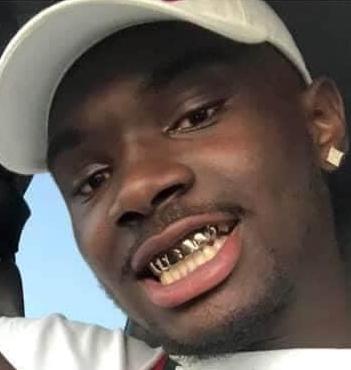
Willard Taylor was a 36-year-old Black man who, on the night of September 19, 2019, never made it home. He is remembered as someone rooted in Missouri, with ties to Carsonville, and whatever brought him to the stretch of North Hanley Road that night ended in a sudden, violent moment that left a permanent silence behind. In the space of minutes, a late Thursday evening turned into a scene of flashing lights and hurried footsteps, the kind of night that fractures families and leaves communities
searching for words that never quite fit.
A call came in around 10:15 p.m., drawing officers to the 4300 block of North Hanley Road near University Place Drive, close to the North Hanley MetroLink area. When they arrived, they found Willard suffering from a gunshot wound. There wasn’t time for explanations or second chances. He was pronounced dead at the scene, right there on the roadside, where the ordinary sounds of traffic and city movement were overtaken by the grim stillness that follows gunfire. In the aftermath, the place became more than an address; it became the last page of his story, written far too early.
In the hours after the shooting, the questions would have come in waves—what happened, why there, who was with him, what words were exchanged before everything broke loose. The investigation began under harsh streetlights and the weight of uncertainty, the kind that hangs in the air when a life is taken and the people left behind can only piece together fragments. Police sought information from anyone who might have seen something, anything—because in cases like this, truth often hides in small details: a glance, a sound, a car pulling away, a figure moving into the dark.
By the next day, there was a turn that suggested the story wasn’t going to remain entirely faceless. A 21-year-old man came forward and turned himself in. It was a development that carried its own heavy implications—of pressure, of conscience, of fear, of inevitability—yet it didn’t bring the clean closure people hope for. At the time, there were no publicly confirmed charges attached to that surrender, no clear public accounting of what the suspect said or what investigators believed had unfolded in those final moments. What remained, instead, was that stark, incomplete space between a name and an outcome—between the certainty of Willard’s death and the uncertainty of what accountability would look like.
And that is often what hurts most for those who loved him: how quickly a person can be reduced to a headline-sized fact, while the real weight of the loss lives elsewhere—in memories, in empty chairs, in birthdays that now arrive with a sting, in phone calls that will never be returned. Willard Taylor was more than the place he died, more than the violence that ended his life. He was a man with a history, a presence, and people who had reasons to expect more time. Even when public records and public updates fall quiet, grief does not. It keeps moving, day after day, carrying his name forward while the rest of the world keeps passing by that stretch of road as if nothing happened there at all.