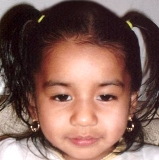
Marialice Clark was a 14-year-old Black girl from Omaha, Nebraska, when she disappeared in 1972. Public records describe her as 5 feet 2 inches tall and about 130 pounds, with black hair and brown eyes; her name has also appeared in records or notices as Mary Alice or Mary Ellis. She had identifying marks that could have helped distinguish her from other children: a birthmark on her right hip and a scar or birthmark on the back left side of her head.
NamUs lists her date of last contact as August 1, 1972, while the National Center for Missing & Exploited Children lists September 27, 1972, a discrepancy that appears connected to the gap between when she was reportedly last seen and when she was formally reported missing.
The account repeated across public case summaries is heartbreakingly brief. Marialice was last seen near the Bali-Hi Lounge in Omaha, and witnesses said she got into a car with license plates from Chicago, Illinois. After that, she was not heard from again. Her mother initially believed Marialice had run away and would come back within a few weeks; when she did not return, her family reported her missing on September 27, 1972. The delay has become part of the sorrow of the case, not because it lessened her family’s concern, but because it reflects how easily a missing Black teenage girl could be misunderstood, minimized, or left without the urgent public attention she deserved.
The years before Marialice vanished have given her case a troubling historical shadow. Public reporting says that, when she was only about 12 years old, her name appeared on a federal search warrant as an alleged informant connected to information about weapons and explosives supposedly hidden at the headquarters of an Omaha group affiliated with the National Committee to Combat Fascism, an organization described as an offshoot of the Black Panther Party. The search reportedly never took place, but the broader investigation was tied to the politically charged aftermath of a 1970 Omaha bombing that killed one police officer and injured another. Two leaders of the National Committee to Combat Fascism, David Rice and Ed Poindexter, were later convicted and sentenced to life in prison; both maintained their innocence.
Marialice’s relatives have questioned whether she truly provided the detailed information attributed to her in the federal paperwork, and whether naming a child in that setting could have placed her in danger. Her family has said they did not learn until many years later that she had been identified in such records, and relatives have expressed pain and anger over the idea that a young girl may have been used, exposed, and then forgotten. Public reporting also notes that family members questioned how a seemingly ordinary pre-teen would have known the detailed information about firearms and explosives described in the affidavit. Those concerns have never replaced the central fact of the missing-person case: Marialice was a child, she disappeared, and the people who loved her were left with decades of unanswered questions.
Marialice’s mother died without learning what happened to her daughter, and other relatives have continued seeking answers. Her case is listed with the Omaha Police Department and the National Center for Missing & Exploited Children, and the available public record still asks for information from anyone who may know something about the car, the Bali-Hi Lounge sighting, the people around her in 1972, or the circumstances that led to her name appearing in federal records before she vanished. In overview, Marialice Clark’s case is the unresolved disappearance of a 14-year-old Omaha girl last associated with the Bali-Hi Lounge and a car bearing Chicago-area license plates, complicated by a delayed missing report, conflicting public dates, and lingering questions about whether events from a federal investigation years earlier may have affected her safety; after more than five decades, her disappearance remains unsolved, and her story remains one of a child whose life and absence still matter.Last Seen: Aug 1, 1972