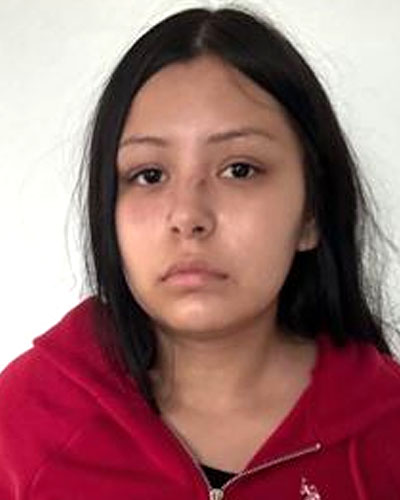
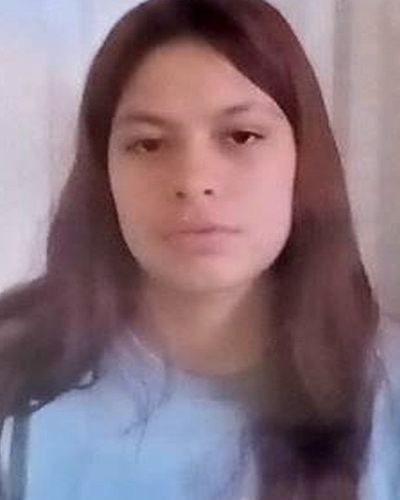
Deandra Jane Agnew was 16 years old and female when she was last seen in Mesa, Arizona, on March 3, 2026. Beyond those central facts, the publicly accessible information surrounding her disappearance is exceptionally limited. Available online material does not provide a detailed, independently verifiable account of the circumstances immediately preceding her disappearance, including where she was going, who may have last spoken with her, whether she was traveling on foot or in a vehicle, or
what caused concern when she could no longer be located. There is also no sufficiently supported public description of what she was wearing or carrying when she was last seen. Because those details have not been established in accessible official or news reporting, adding them would risk creating a version of events that is not supported by the known record.
The lack of a lengthy online account does not lessen the seriousness of Deandra's disappearance. Missing-child information is not always published in the same way from one case to another. The National Center for Missing & Exploited Children explains that its public missing-child map contains only cases for which a poster has been requested, meaning the absence of a detailed public poster should not by itself be interpreted as evidence about the circumstances or disposition of a particular case. NCMEC also notes that information disseminated about missing children can originate from different law-enforcement agencies and that members of the public should rely on the appropriate investigating agency when acting on case information.
National missing-person information can likewise be distributed across different systems rather than appearing in a single complete public record. The National Missing and Unidentified Persons System, operated as a U.S. Department of Justice resource, serves as a centralized repository that allows law enforcement, families, and other authorized participants to enter and search missing-person information and provides investigative and forensic support. NamUs emphasizes the importance of sharing case information across jurisdictions, but the existence and amount of publicly viewable information can vary considerably from case to case. In Deandra's case, the publicly accessible sources located do not provide enough verified information to reconstruct her movements during the hours leading up to March 3, identify a particular last-known companion, establish a destination she may have intended to reach, or describe any confirmed subsequent sighting. There is therefore no responsible basis for presenting any of those possibilities as part of her story.
What remains is a case defined by a small number of important facts and many unanswered questions. Deandra was a teenager when she disappeared from Mesa, and March 3, 2026, marks the last-seen date associated with her case. With so little verified information available publicly, even seemingly minor details could easily become distorted if repeated without an authoritative source. The most accurate account is therefore one that preserves the facts that are known while resisting speculation about why she disappeared, where she may have gone, or who may have been involved. In overview, Deandra Jane Agnew was 16 when she was last seen in Mesa on March 3, 2026, and the publicly available record provides few additional verified circumstances surrounding that disappearance. Her case is consequently a reminder that a sparse public record does not make a missing young person less important; it simply leaves the story with significant gaps that can only be filled by reliable information from those with direct knowledge of what happened.Last Seen: Mar 3, 2026