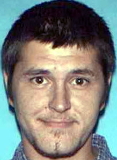
William Edward Wright was a 61-year-old male last seen on December 1, 2019, in Lebanon, Missouri. The public record around his disappearance is extremely limited, leaving only the essential outline of the case: his name, age, gender, last-seen date, and last-known location. Lebanon sits in Laclede County, in south-central Missouri, and the absence of detailed public circumstances means the story begins not with a clear sequence of events, but with a quiet and painful gap: a man was last known to be in his community, and after that point, the available public information does not explain where he went, who last spoke with him, what he may have been wearing, or whether he was traveling on foot or by vehicle.
Because so few details have been made public, William’s case is defined by what remains unknown. There is no widely available public narrative describing the hours before he was last seen, whether he had planned to leave, whether he was expected somewhere, or whether anyone noticed immediate signs of distress. Cases with such sparse information are especially difficult for families and communities, because the lack of public facts can make it harder for people to recognize what might matter: a brief sighting, a remembered conversation, an abandoned item, a vehicle, or any small detail from around December 1, 2019, in or near Lebanon.
Missouri’s public missing-person information system notes that its online missing-person data is derived from NCIC information through investigating agencies and is updated automatically, and it directs people seeking further information to contact the investigating agency connected to a case. The same Missouri State Highway Patrol public listing shows that active missing-person records are presented with fields such as name, gender, race, missing-since date, age, investigating agency, missing-from location, type, and poster availability, underscoring how official missing-person summaries often preserve only the most basic identifying and investigative details for public use.
In the broader system of missing-person investigations, national resources such as NamUs serve as centralized repositories for missing, unidentified, and unclaimed person cases, helping investigators compare long-term missing-person reports with unidentified remains and other records. That larger context matters in a case like William’s because when the public story is thin, formal databases, law-enforcement records, family tips, and forensic comparison systems may become the primary means of keeping a case from fading. Even when there is little to publish, the case still represents a real person and a real absence felt by those who knew him.
At its heart, the case of William Edward Wright is the story of a 61-year-old man last seen in Lebanon, Missouri, on December 1, 2019, followed by years of unanswered questions. The publicly available information does not provide a clear reason for his disappearance, a route of travel, a confirmed destination, or a detailed description of the circumstances surrounding the last known contact. What remains is a compassionate but incomplete overview: William’s last known point was Lebanon, Missouri; the known date was December 1, 2019; he was a 61-year-old male; and the case, as publicly described, rests on a small set of facts with many details still unknown.
Last Seen: Dec 1, 2019