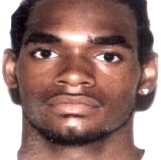
On September 23, 1999, Rongy Samuel Merrick, a 44-year-old Black / African American man, was reported missing from Washington, D.C., beginning a case that would remain unresolved in public missing-person records for more than two decades. Born on April 2, 1955, Merrick lived in the 4200 block of Dix Street Northeast, a residential neighborhood in the nation's capital. His disappearance was reported to authorities by his sister after he could not be located.
At the time, he was last known to have been driving a white 1989 Pontiac four-door station wagon bearing Virginia license plate YUR9620. The vehicle represented one of the few substantial clues available to investigators attempting to determine where he had gone and what circumstances had prevented him from returning. Although his disappearance was initially documented as a missing-person investigation, information subsequently provided by a close member of his family revealed a tragic development: Merrick had been murdered. The family's account provides important context to a disappearance that had remained publicly unexplained for years, although the circumstances surrounding the reported homicide could not be independently verified.
When Merrick was first reported missing, investigators had limited information about his activities leading up to his disappearance. His last known location was associated with his residence on Dix Street Northeast, but the publicly available records did not establish his intended destination, whom he might have planned to meet, or whether anyone accompanied him when he was last seen driving his Pontiac station wagon. Authorities documented his physical description in hopes that someone might recognize him or provide information about his whereabouts. Merrick stood approximately 5 feet 3 inches tall, weighed approximately 130 pounds, and had a medium complexion, short dark hair, and brown eyes. He was also described as possibly having facial hair. The clothing he wore when he disappeared was not documented in the available records. Without a confirmed destination, a detailed timeline of his final movements, or publicly disclosed witness accounts, investigators faced significant uncertainty about what had happened to him.
The Metropolitan Police Department in Washington, D.C., handled Merrick's missing-person investigation, which was assigned case number 99-603293. His information was circulated through missing-person organizations, including the Black and Missing Foundation and the Doe Network, which maintained records of his disappearance and the circumstances under which he was last seen. The Black and Missing Foundation classified his disappearance as an endangered missing-person case, preserving identifying information about Merrick and the vehicle he had been driving. These public records allowed his case to remain visible long after the initial investigation began. However, the available reports contained little information about possible investigative leads, searches, interviews, or evidence collected by law enforcement. There were no publicly confirmed accounts identifying where his vehicle was eventually located, whether investigators developed suspects during the original investigation, or whether evidence of a violent crime emerged in the years following his disappearance.
As time passed, Merrick's case remained among the many long-standing disappearances documented in Washington, D.C. For his family, the absence of publicly available answers meant that the circumstances surrounding his disappearance were not fully explained in the records accessible to the public. Years passed without a detailed public account of his whereabouts or the events that followed his disappearance. His information continued to appear in missing-person databases and discussions, preserving the details of his disappearance and making them available to individuals who might have recognized him or recalled seeing his vehicle. Although these records established the basic facts surrounding the original missing-person report, they offered no comprehensive explanation of what had occurred after September 23, 1999.
According to information provided by a close member of Merrick's family, his disappearance ultimately involved a homicide. The family reported that Merrick had been murdered, a significant clarification to the circumstances previously documented in public missing-person listings. This information indicates that his disappearance was not simply a case of someone whose whereabouts remained unknown, but was connected to the loss of his life through an act of violence. However, the family-provided information did not establish a verified date of death, the location where the murder occurred, the manner in which he was killed, or the events immediately preceding his death. Publicly accessible reports reviewed for the case also did not identify a suspected perpetrator, disclose a motive, or establish whether anyone had been arrested, charged, or convicted in connection with his death. The report that Merrick was murdered came from a close member of the family and could not be independently verified through the available public records.
An important development in Merrick's case appeared in October 2021, when the Doe Network updated its records to reflect that he was no longer considered missing. On October 25, 2021, the organization included Rongy Samuel Merrick among its closed missing-person cases, citing information from the National Missing and Unidentified Persons System, commonly known as NamUs. The Doe Network's update confirmed that his name had been removed from the active missing-person listings, but it did not disclose the circumstances leading to that decision. There was no publicly available explanation establishing when authorities learned what had happened to Merrick, when his whereabouts were determined, or whether the closure was connected to the homicide described by his family. Although the database update marked the end of his publicly recorded missing-person status, it left substantial questions concerning his disappearance and death unanswered.
The family's disclosure that Merrick was murdered adds a deeply tragic dimension to a case that was publicly known primarily as a decades-long disappearance. His original missing-person report documented a man who had vanished from Washington, D.C., while driving his vehicle, leaving investigators with limited clues about his movements. The subsequent closure of his missing-person listing established that he was no longer being sought as a missing individual, but the public records did not provide the details necessary to reconstruct the events that led to his death. The absence of independently verified information concerning the homicide also leaves unanswered whether law enforcement identified the person or persons responsible, whether the killing was investigated as part of the original missing-person case, or whether criminal proceedings occurred. Without additional verified investigative findings, those questions remain unresolved in the publicly available documentation.
Rongy Samuel Merrick's story began with a disappearance reported by his sister on September 23, 1999, and continued through more than two decades of public uncertainty before his missing-person listing was closed in 2021. What was initially documented as an unexplained disappearance has since been clarified through information supplied by a close member of his family, who reported that Merrick was murdered. His case reflects the devastating consequences of a disappearance involving a violent death and the importance of preserving accurate information about victims whose stories may not be fully represented in public records. While the available documentation confirms the original missing-person report and the eventual closure of his listing, it does not independently establish the circumstances of his reported murder or identify anyone responsible. Ultimately, Merrick's case represents the tragic loss of a man whose disappearance remained publicly documented for approximately twenty-two years, with his family providing the crucial information that his life had ended in homicide. The family's account could not be independently verified, and the precise circumstances of his death, including any criminal investigation or prosecution, remain undisclosed in the available public records.Last Seen: Sep 23, 1999