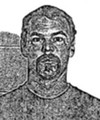
James Homer Wright, a 19-year-old male from Redding, California, disappeared in 1988, beginning a mystery that would remain unresolved for nearly four decades. Although some secondary listings have given August 23, 1988, as the date he vanished, the National Missing and Unidentified Persons System and later reporting based on the official investigation identify his last known contact as November 23, 1988.
Wright, affectionately known to his family as “Little Man,” was a young Native American man and a member of the Pit River Tribe. On the day he disappeared, he left a family member’s residence on the west side of Redding on his bicycle, saying that he intended to go to a nearby gas station. He never returned, and his family did not hear from him again. His sudden absence was especially painful because there was no explanation for why an ordinary bicycle trip had ended with him seemingly vanishing from the lives of the people who loved him.
The period immediately before Wright disappeared was remembered vividly by his mother, Florence Moran. She later recalled unexpectedly seeing her son while she was in Redding shopping around Thanksgiving. Wright rode past her on his bicycle, and the encounter became one of her final memories of him. He joined her for dinner and spoke about his hopes for the future, including plans to work at a logging camp near Placerville, earn a certificate, and begin working as a sawyer. Those plans made his disappearance all the more heartbreaking: he was a young man apparently looking ahead to work and adulthood when his life abruptly became an unanswered question. For his mother and other relatives, the years that followed were not simply the passage of time in an old missing-person investigation. Birthdays, holidays, and family milestones arrived without knowing whether Wright was alive, where he might be, or whether he would ever come home.
Unknown to Wright’s family, an important part of the answer had been found relatively close to home. In the fall of 1990, roughly two years after his disappearance, human skeletal remains were discovered on a small island in the Sacramento River in the Redding area. Contemporary accounts described the discovery near Wixon Island, close to the South Bonnyview Road Bridge. Additional remains were located during another search of the island the following year. Investigators could not identify the deceased person at the time. The remains were initially believed to belong to a young woman, in part because of the small white Nike high-top shoes found with them, and the unidentified person remained separated from Wright’s missing-person case. Authorities believed the person had already been dead for at least a year by the time the remains were discovered.
For years, the unidentified remains and Wright’s disappearance proceeded as separate mysteries. The limitations of forensic science contributed to that separation. According to the Shasta County Sheriff’s Office, DNA testing was not available to California investigators in the way needed for the case until years after the remains had been recovered. The remains were eventually submitted for further examination in 2006, and in 2007 investigators determined that they were male, correcting the much earlier belief that the deceased person had been female. Even then, there was no immediate identification. Wright’s family continued living with uncertainty while the remains of their loved one remained classified as those of an unidentified person.
The connection that finally began bringing the two cases together came through the persistence and memory of Wright’s mother. In September 2025, the Shasta County Sheriff’s Office Major Crimes Unit reopened the investigation into Wright’s disappearance. During the renewed examination of the case, Florence Moran recognized a distinctive pair of Nike high-top shoes associated with the unidentified remains recovered from the Sacramento River. Shoes that had once contributed to investigators mistakenly thinking the remains belonged to a woman instead became a crucial link to the missing teenager her family had been searching for since 1988. The Redding Police Department and Shasta County Sheriff’s Office began working together on the lead and obtained DNA samples from members of Wright’s family. Testing was coordinated with the California Department of Justice and Othram, a laboratory specializing in advanced DNA and forensic genealogy work.
DNA analysis ultimately established what Wright’s family had waited decades to learn: the unidentified remains recovered from the Sacramento River were those of James Homer Wright. Authorities reported that the positive identification was made in March 2026 after renewed forensic testing and comparison with family DNA. Investigators conducted additional work to confirm the findings before Wright’s relatives were formally notified in July 2026. The discovery meant that Wright had not remained missing somewhere beyond Redding for all those years; his remains had been recovered only about two years after he disappeared, but the available investigative and forensic methods had been unable to connect his identity to them. The Redding Police Department and Shasta County Sheriff’s Office subsequently announced that the decades-old missing-person mystery had been resolved and returned Wright’s remains to his family.
For Florence Moran, the identification brought the answer she had feared she might never receive. She had continued hoping to find her son and later explained that she wanted to bring him home before she died. When Wright’s remains were finally released, members of his family and Tribal community gathered at the Shasta County Coroner’s Office to receive him. His aunt carefully transferred his remains into a small pine coffin while family and Tribal members took part in a respectful ceremony before beginning the journey to bring him home for burial. Moran described the identification as bringing long-awaited closure while also acknowledging that grief and healing would continue. The resolution could not restore the future Wright had spoken about before he disappeared, but after decades in which his family had been forced to live without knowing his fate, they were finally able to mourn him with certainty and dignity.
James Homer Wright’s case ultimately became the story of two unresolved investigations that had unknowingly been connected for decades: a young man who rode away from a family residence in Redding in 1988 and never came home, and unidentified remains recovered from the Sacramento River in 1990 that could not initially be given a name. The recognition of Wright’s shoes by his mother, the reopening of the investigation, cooperation between the Redding Police Department and Shasta County Sheriff’s Office, and modern DNA analysis finally united those two histories. Official reports now confirm that Wright was found deceased and that his remains have been returned to his loved ones. His disappearance is therefore no longer an active missing-person mystery, although publicly available reporting does not establish precisely what happened to him after he left on his bicycle or the exact circumstances that led to his death. What is known is that James was 19 years old when he vanished, that his family continued searching and hoping for answers across nearly four decades, and that their persistence eventually helped restore his identity and bring “Little Man” home.Last Seen: Aug 23, 1988