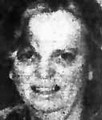
Cathy Marie Moulton was 16 years old when she vanished from Portland, Maine, on September 24, 1971. She was a Deering High School junior, described in later reporting as a bright and friendly teenager who loved dancing, wrote poetry, sewed some of her own clothes, babysat neighborhood children, and cared for elderly neighbors. That Friday, she had plans to attend a 7-11 Club dance at the YWCA, but first she needed to run errands downtown.
Her father dropped her off near Forest and Cumberland avenues sometime in the afternoon, and she went to buy items for the evening, including pantyhose, toothpaste, and thread to finish hemming the outfit she had made to wear. She stopped at the former Porteous, Mitchell & Braun store on Congress Street, then went to Starbird Music on Forest Avenue, where she visited a friend. When she left the music store, she said she was heading home and expected to see her friend later at the dance. She was carrying two tubes of toothpaste and a brown leather handbag, but she never reached her Clinton Street home.
At the time she disappeared, Cathy was approximately 5 feet 4 inches tall and weighed about 98 pounds. She had light brown or sandy-brown hair, blue eyes, and wore thick, dark-rimmed eyeglasses. National Center for Missing & Exploited Children records say she had braces and that four eye teeth had been removed, while NamUs notes that her four first bicuspids may have been removed but that verification of those extractions was not confirmed. She was last reported wearing a navy blue all-weather coat, navy blue pant dress or dress pants, and brown leather shoes; Portland police have also described her as carrying a brown leather bag. Identifying details in public missing-person records include scars on both feet, a discoloration or white spot on her left arm or elbow, and dental characteristics that later became important in attempts to compare her case with unidentified remains.
When Cathy did not come home for dinner, her family knew something was wrong. Her sister later said the family routine was close and predictable, with dinner together each evening, and Cathy’s mother had said that in their family, they called if they were going to be late. The clothes Cathy had planned to wear to the dance were still at home, and there was no sign that she had prepared to leave her life behind. Her parents reported her missing, but the early response was shaped by assumptions common to the period: authorities initially treated her disappearance as if she might have run away. Later accounts from her family and investigators emphasized how painful that delay was, because those who knew Cathy did not believe she had intended to disappear voluntarily.
More than two decades later, the case received renewed attention when retired Portland detective Kevin Cady began reviewing the old file in the 1990s. According to the Portland Press Herald, the file was thin, consisting largely of the original missing-person report and a later investigative supplement. Cady spoke with people connected to Cathy and learned more about an older boyfriend, Lester Everett, who was reportedly known around town. Witnesses later reported seeing Cathy get into a blue car with two older boys on the day she disappeared. Investigators developed a theory that Everett had stolen a blue 1963 Cadillac from a woman in Falmouth and had picked up Ronald Reid Perley, a Canadian man in his 20s, before driving north toward the Tobique Reserve near Perth-Andover, New Brunswick. A garage employee in Fort Fairfield, Maine, reportedly remembered seeing Cathy with the men when new tires were bought for the Cadillac, and later witness accounts placed Cathy in northern Maine and across the border in Canada.
Those later witness accounts changed the understanding of Cathy’s disappearance from a simple vanishing on a Portland street into a far more complex and heartbreaking cold case. The Charley Project and the Portland Press Herald report that investigators came to believe Cathy had been taken north against her wishes, kept from leaving while working on a potato farm in Aroostook County, and later brought to the Tobique Reserve in New Brunswick. One witness from the potato harvest reportedly recalled a girl using the name Candy who cried often, seemed frightened, and said she wanted to go home. Investigators have said they believe Cathy died on the Tobique Reserve sometime before Thanksgiving 1971, but her body has never been recovered, no official suspects have been named by Portland police, and no one has been charged. Everett died in the mid-1980s, and Perley, who became a longtime focus of the investigation, reportedly refused to cooperate even when offered immunity for information about what happened to her.
There were also painful possible leads that did not bring Cathy home. In 1983, a hunter reported finding a skeleton in woods near Smyrna, Maine, surrounded by women’s clothing, and some investigators believed the remains might have been Cathy’s. But the hunter could not find the location again, and the bones were never recovered. Dental records also helped exclude Cathy from comparisons with hundreds of unidentified female remains in the United States and Canada, but no match has resolved her case. Her father, Roy Moulton, died in 2017 without knowing what happened to his daughter, while her family has continued to hope for answers. Portland police renewed public calls for information on later anniversaries of her disappearance, describing the case as open and asking anyone with information to contact investigators. Cathy’s case remains one of a young girl who left home for ordinary errands before a dance and never returned: a 16-year-old daughter, sister, student, and friend last seen on Forest Avenue in Portland, whose disappearance has endured for decades as one of Maine’s oldest active missing-person cases, with investigators believing she was taken north after leaving the city, her remains still unrecovered, and her family still deserving the truth.Last Seen: Sep 24, 1971